Shared Glasses, Lasting Bonds: How Charlotte's Sommeliers Are Turning Wine Into a Social Catalyst
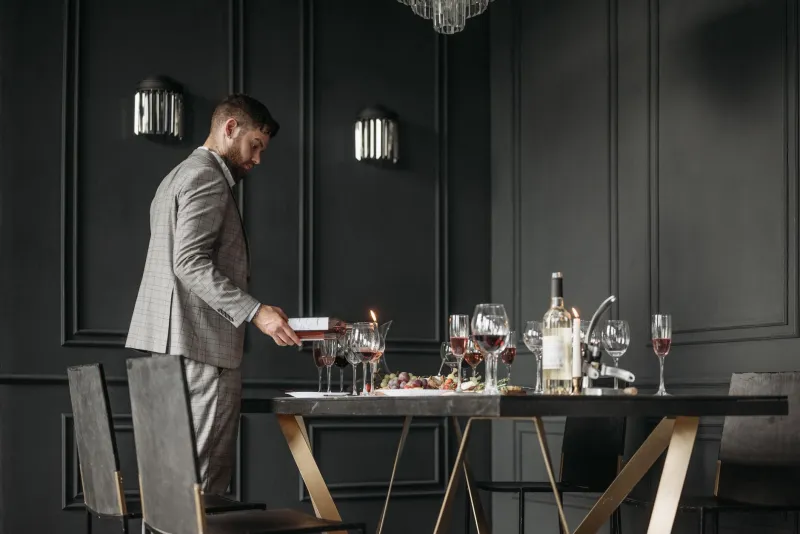
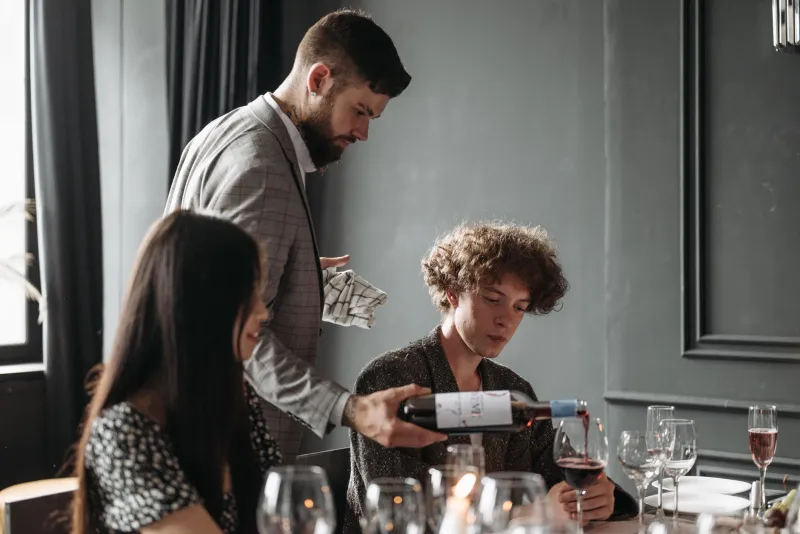
In Charlotte's most distinguished dining rooms, the wine list is no longer simply a menu — it has become an opening line. Leading sommeliers across the city are discovering that a carefully chosen bottle, presented with intention, has a remarkable capacity to dissolve the formalities that typically separate strangers at the table. What begins as an explanation of tannin structure or a note about a producer in Burgundy can quietly evolve into something far more personal: a genuine human connection.
This is not coincidence. It is, according to those who orchestrate these moments nightly, a craft in its own right.
The Psychology Behind the Pour
Wine has long occupied a singular position in social ritual. Unlike a cocktail ordered and consumed in relative solitude, a bottle of wine is, by its very nature, a shared proposition. It invites commentary. It demands patience. And perhaps most significantly, it rewards those willing to pay attention.
"There is something about the act of tasting together that levels the room," says one senior sommelier at a well-regarded uptown Charlotte establishment. "When two people are reaching for the same vocabulary to describe what they're experiencing — whether it's a mineral finish or a note of dried cherry — they are, in a very real sense, learning to listen to each other at the same time."
This observation aligns with research in social psychology suggesting that shared sensory experiences accelerate interpersonal trust. When individuals navigate an unfamiliar or nuanced experience simultaneously, they tend to become more receptive, more curious, and more willing to reveal something of themselves. A guided wine tasting, it turns out, creates precisely those conditions.
The Communal Table as Common Ground
Several of Charlotte's premier dining venues have begun formalizing this dynamic through communal tasting events — structured evenings designed not around a specific vintage or appellation, but around the experience of discovery itself. At these gatherings, guests who arrive as strangers are seated together and guided through a flight of wines chosen for their capacity to provoke discussion rather than simply impress.
One sommelier who has hosted such evenings regularly for the past three years describes the deliberate curation involved. "I don't open with a wine everyone will immediately love," she explains. "I open with a wine that asks something of you. Maybe it's a little austere at first, or the nose is unusual. That friction gives people something to talk about. And once they're talking about the wine, they're really talking about themselves — their memories, their preferences, their hesitations."
The results, by her account, have been quietly extraordinary. She recalls one autumn evening in which two guests — a recently retired architect and a young restaurateur new to Charlotte — spent the better part of an hour debating the merits of a Rhône Valley Syrah before realizing they had both lived, at different points in their lives, within a few kilometers of the same village in southern France. That evening concluded with the exchange of contact information and, eventually, a professional collaboration.
"Wine gave them a language before they had one," she says. "That's what I think about when I'm building a flight."
The Sommelier as Social Architect
What distinguishes Charlotte's most thoughtful wine professionals is an understanding that their role extends well beyond the cellar. They are, in many respects, social architects — individuals who shape the conditions under which connection becomes possible.
This requires a particular kind of attentiveness. A skilled sommelier reads a table the way a seasoned host reads a room: noting who is engaged, who is reticent, who might benefit from a question redirected their way. The introduction of a new wine becomes an opportunity to draw a quieter guest into the conversation, to invite a perspective that might otherwise remain unexpressed.
"I think of myself as a facilitator," says one wine director whose program has garnered significant attention in Charlotte's dining community. "My job is to create a moment where two people feel comfortable enough to be curious together. Wine is the most elegant tool I have for doing that."
This philosophy has particular resonance in the context of Charlotte's rapidly evolving dining scene, where the city's growth has brought together residents from vastly different backgrounds, regions, and culinary traditions. The fine dining table, at its best, becomes a space where those differences are not merely tolerated but actively celebrated — and wine, with its capacity to evoke place, memory, and identity, is uniquely suited to that purpose.
Wine Education as a Bridge
Beyond structured tasting events, Charlotte's sommeliers are also finding that informal wine education programs — offered through restaurants, private clubs, and independent venues — serve as surprisingly fertile ground for lasting friendship.
Participants in these programs frequently describe a sense of intellectual camaraderie that develops over the course of several sessions. There is, after all, something inherently equalizing about being a student. Regardless of professional status or social standing, everyone in a wine education class begins from a position of genuine curiosity, and that shared vulnerability tends to bring people closer together than more performative social settings might.
"I've watched people come into our introductory sessions barely making eye contact," observes one educator who leads regular wine programs in partnership with several Charlotte restaurants. "By the third week, they're texting each other about bottles they've tried at home. By the end of the series, they're planning dinners together. The wine is almost incidental at that point — it's the shared learning that did the work."
What the Glass Reveals
Perhaps the most enduring insight offered by Charlotte's sommelier community is this: wine, at its most meaningful, is not about the wine at all. The vintage, the appellation, the producer — these are the opening chapters of a conversation whose real subject is the people holding the glasses.
In a city that continues to define its own fine dining identity, that understanding feels both timely and essential. Charlotte's dining rooms are filling not merely with guests seeking an excellent meal, but with individuals hungry for something less easily itemized on a menu: genuine encounter, the pleasure of being surprised by another person, the quiet satisfaction of a connection made in the most civilized of circumstances.
The sommelier who grasps this — who sees the decanted bottle not as the destination but as the doorway — is offering something that transcends hospitality. They are, in the truest sense, setting the table for friendship.
And in Charlotte's most distinguished dining rooms, that table is increasingly worth pulling up a chair to.