Stripped of Their Labels: How Blind Tasting Is Reshaping the Fine Dining Experience in Charlotte
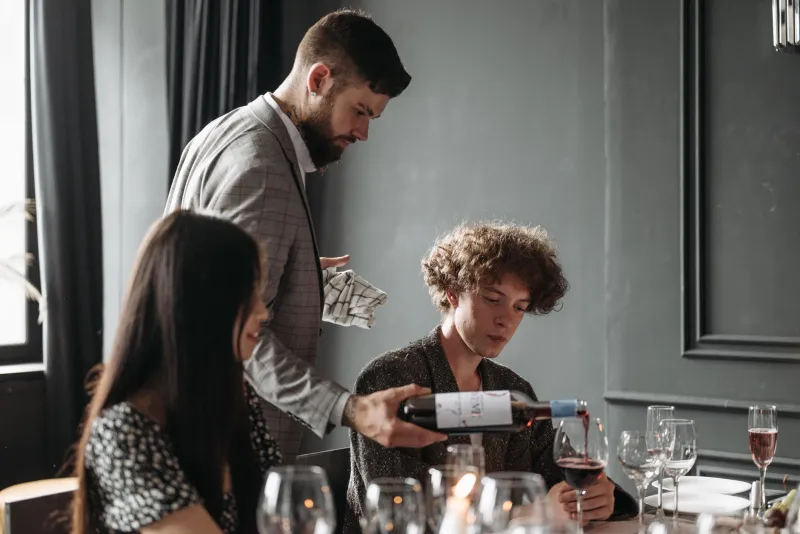
There is something quietly radical about placing a wine glass in front of a seasoned diner and withholding the one piece of information they believe they need most: the label. No producer, no vintage, no price point. Just wine, light, and the honest work of the senses.
Across Charlotte's upscale dining rooms and intimate private supper clubs, this practice — blind tasting — is gaining considerable momentum. What was once the exclusive domain of Master Sommelier examinations and competitive wine circuits has found a natural home among curious, discerning diners who are beginning to trust their own palates over inherited assumptions.
The results, as any sommelier who has conducted one of these sessions will tell you, are rarely what anyone expects.
The Tyranny of the Label
Wine carries more cultural weight than perhaps any other beverage. A bottle's country of origin, its producer's reputation, and especially its retail price all arrive at the table long before the first pour. These contextual signals shape perception in ways that are difficult to overstate.
"When a guest sees a $180 Napa Cabernet on the table, they've already decided they're going to enjoy it," says one sommelier at a South End restaurant who has been running structured blind tasting dinners for private groups over the past two years. "Remove that information, and suddenly they're using muscles they didn't know they had. They're actually tasting."
This phenomenon has a name in behavioral economics: expectation bias. Studies have repeatedly demonstrated that the same wine, presented at different price points, is consistently rated higher when the higher price is disclosed. The wine itself hasn't changed. The diner's framework for receiving it has.
Blind tasting dismantles that framework entirely, and what emerges in its place is often a revelation.
Charlotte's Appetite for the Unexpected
The city's fine dining landscape has matured considerably over the past decade, with an increasingly sophisticated dining public that has moved well beyond the Cabernet-and-Chardonnay defaults that once dominated upscale wine lists. Restaurants across Dilworth, Plaza Midwood, and Uptown have responded by building wine programs that venture into Grüner Veltliner, aged Rioja, Jura Chardonnay, and natural wines from obscure appellations.
Blind tasting, it turns out, is one of the most effective tools for bringing guests along on that journey.
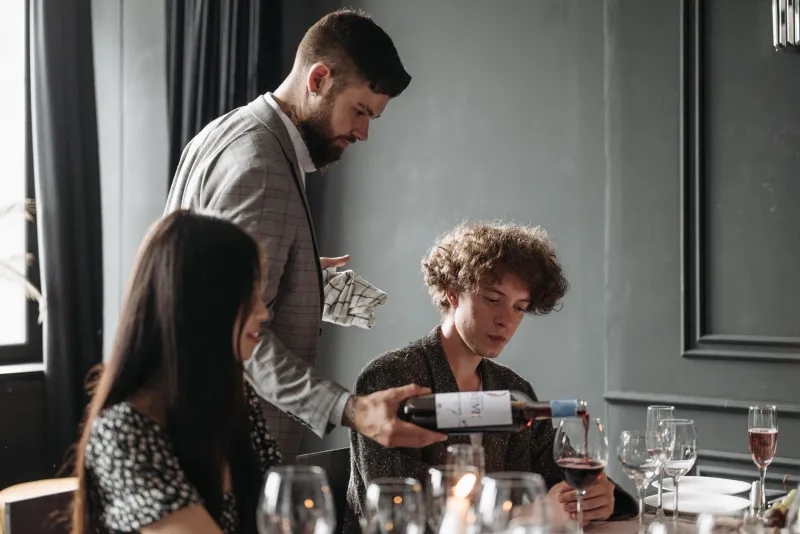
"We started incorporating blind pours into our tasting menu format about eighteen months ago," explains the beverage director at an Uptown Charlotte restaurant known for its rotating, chef-driven menu. "We present one course with the wine already poured, no information given. We ask guests to describe what they're tasting — fruit, texture, where they think it might be from. Then we reveal it. The conversations that follow are the best in the room."
Those conversations, she notes, frequently expose the gap between what diners expect to enjoy and what they actually respond to. A table of guests who arrived as self-described Burgundy devotees recently found themselves unanimously captivated by a Willamette Valley Pinot Noir they initially assumed was European. Another group, convinced they disliked Riesling, discovered their enthusiasm for a dry Alsatian example once the grape variety was withheld.
Private Dining and the Art of the Reveal
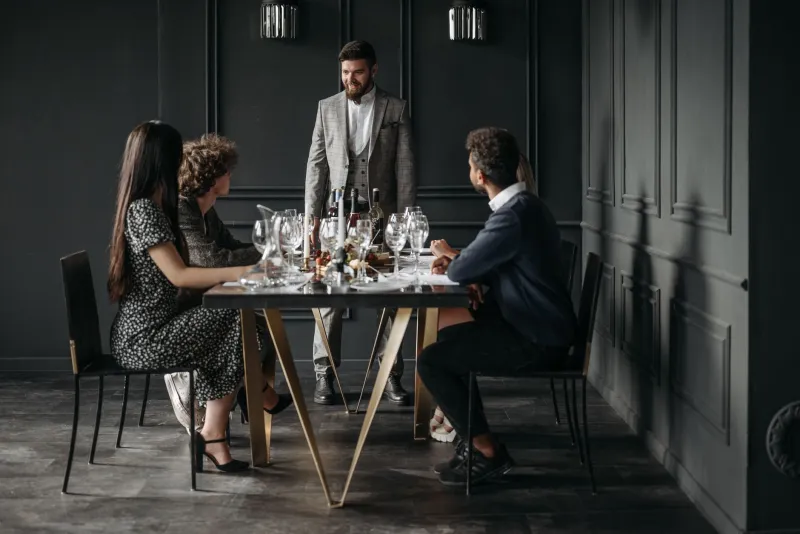
Beyond restaurant settings, blind tasting has found fertile ground in Charlotte's private dining culture. Corporate entertaining, milestone celebrations, and intimate dinner parties have all become occasions for hosts to introduce the format — often with a competitive edge that adds to the evening's energy.
Local wine educators and private sommeliers report increasing demand for curated blind tasting experiences, where flights are assembled around a theme — a single grape variety across multiple regions, old world versus new world expressions, or wines at dramatically different price tiers — and guests are invited to rank and assess before the reveal.
The price-tier format, in particular, tends to produce the most memorable moments. "I've watched people confidently select a $22 bottle as their favorite over a $90 one, and then watch their entire relationship with wine shift in real time," says one Charlotte-based private wine educator who hosts monthly tasting events for a rotating roster of clients. "That moment of cognitive dissonance is actually the most valuable thing I can offer. It gives people permission to trust themselves."
That permission, it seems, is precisely what many fine diners have been waiting for.
What the Palate Knows
Blind tasting is not without its complications. Even trained professionals — sommeliers, critics, winemakers — misidentify wines with notable frequency under blind conditions. The 2008 Berlin Tasting, a landmark blind evaluation, saw California wines outperform storied Bordeaux and Burgundy châteaux in the hands of expert judges. The results were controversial precisely because they unsettled a deeply entrenched hierarchy.
For the enthusiast diner, however, the occasional misidentification is not a failure. It is the point.
"Getting it wrong is how you learn what you actually perceive versus what you've been told to perceive," notes a sommelier at a Charlotte steakhouse with one of the city's most extensive wine programs. "When someone tastes a wine blind and describes it as earthy and savory, then discovers it's a grape they claimed not to like, that's not embarrassing. That's an education."
The educational dimension is one that Charlotte's finest dining establishments are beginning to formalize. Several restaurants now offer blind tasting as a structured add-on to private dining packages, with sommeliers guiding guests through the process with the same care and narrative depth they bring to a traditional wine pairing dinner.
A More Honest Relationship with Wine
Ultimately, what blind tasting offers Charlotte's fine dining community is something rarer and more valuable than the discovery of a new favorite producer or an unexpected regional gem. It offers honesty — a direct, unmediated encounter between a diner and a glass that asks only one question: what do you actually taste?
In a wine culture still heavily influenced by critics' scores, prestige appellations, and the social currency of recognizable labels, that question carries genuine weight. The answer, increasingly, is surprising.
Charlotte's sommeliers are watching their guests arrive at wine lists with a new kind of confidence — one earned not from reading reviews or memorizing regions, but from the quiet, revelatory experience of trusting their own senses in a darkened dining room, with nothing to guide them but the glass in their hand.
At its best, that is what fine dining has always been about: the experience stripped of pretense, honest to the last sip.