Fewer Bottles, Greater Meaning: How Charlotte's Elite Restaurants Are Choosing Rarity Over Range

There was a time, not so long ago, when the prestige of a fine dining wine program was measured almost entirely by its sheer scale. A leather-bound list running to forty pages. Hundreds of labels organized by appellation, vintage, and varietal. The weight of the binder itself communicating seriousness before a single cork had been pulled. In Charlotte's most ambitious dining rooms, that era is quietly drawing to a close.
A growing number of the city's top-tier restaurants are deliberately narrowing their wine offerings, stepping back from the encyclopedic approach and instead building collections anchored by rare, difficult-to-source bottles that carry genuine stories. The shift is less about austerity and more about intention — and for the diners fortunate enough to encounter these programs, it is producing wine experiences that are genuinely difficult to replicate elsewhere.
The Problem With Having Everything
For all its apparent generosity, a vast wine list presents its own complications. Inventory carrying costs accumulate quietly in temperature-controlled cellars. Bottles that rarely move tie up capital for years. And from the guest's perspective, navigating three hundred selections with a meal already in motion can feel less like an invitation and more like an examination.
Wine directors at several of Charlotte's most respected establishments have begun articulating a different philosophy — one that prizes the depth of a single meaningful selection over the breadth of a hundred adequate ones. The analogy that surfaces repeatedly in these conversations is that of an independent bookshop versus a warehouse retailer. Both sell books. Only one of them feels like a discovery.
"When a guest opens our list and sees sixty wines instead of six hundred, there's an initial moment of surprise," noted one wine director at an upscale dining room in the South End corridor. "But then something shifts. They start reading rather than skimming. They ask questions. The conversation becomes genuinely interesting."
Scarcity as a Form of Hospitality
The rare bottle strategy is not simply a cost-cutting measure dressed in philosophical language. Sourcing genuinely scarce wine requires sustained effort, cultivated relationships with importers and auction houses, and a willingness to pursue allocations that many larger programs cannot access at all. For the restaurants committing to this model, acquisition has become an active and ongoing practice rather than a seasonal reorder.
Allocation wines from small Burgundian producers, single-vineyard bottlings from California's most coveted addresses, aged Barolo from estates that release only a few thousand cases annually — these are not wines that arrive through routine distributor relationships. They are earned through years of demonstrated commitment, and their presence on a list signals something meaningful to guests who recognize them.
One beverage director described spending a significant portion of each quarter traveling to meet producers directly, attending trade tastings, and monitoring secondary market offerings for bottles that would otherwise be inaccessible to Charlotte diners entirely. "We're not trying to have something for everyone," she explained. "We're trying to have things that almost no one else has. That distinction matters enormously to the guests we're serving."
What Rarity Means for the Dining Experience
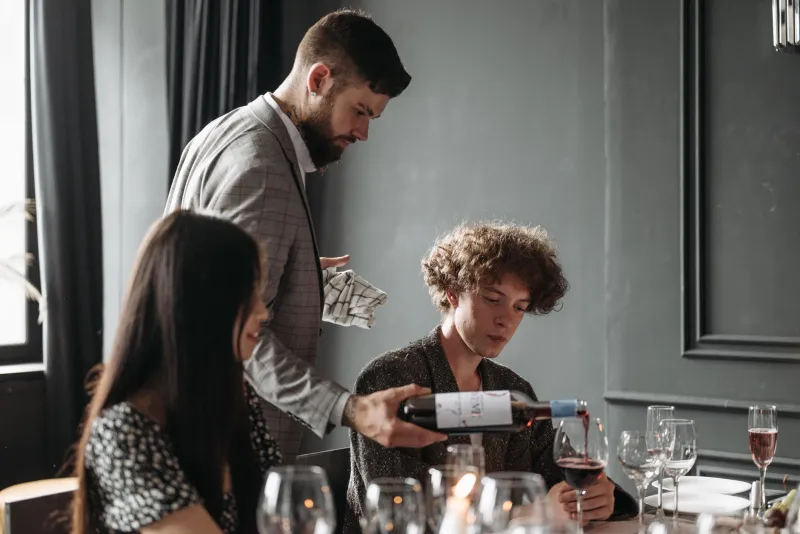
The practical effect of this approach on the table is difficult to overstate. When a sommelier presents a guest with a bottle that carries genuine scarcity — a wine from a vintage that produced fewer than five hundred cases, or a producer whose domestic allocation is limited to a handful of accounts — the encounter takes on a character that no amount of service polish can manufacture artificially.
The wine becomes a point of genuine connection. Guests who might otherwise order efficiently and move on find themselves drawn into conversation about how the bottle arrived at the table, what made this particular vineyard or vintage worth pursuing, and why it pairs with a specific dish in a way that a more readily available selection simply would not. The rarity is not a marketing affectation. It is the thing itself.
For restaurants, this dynamic also serves a practical purpose. Guests who experience a wine moment that feels genuinely singular are far more likely to return — not to replicate the experience, but because they trust that the next visit will offer something equally unexpected. Loyalty built on discovery is considerably more durable than loyalty built on consistency alone.
The Collector Mentality Behind the Bar
What distinguishes the restaurants succeeding with this model is that their wine directors think less like traditional beverage managers and more like private collectors with curatorial instincts. The questions guiding acquisition are not primarily commercial. They are aesthetic and experiential: What does this bottle say that nothing else on the list already says? What moment does it create that a guest could not find anywhere else in Charlotte?
This mentality extends to how these programs age and release their inventory. Rather than cycling through stock on a predictable rotation, several Charlotte establishments now hold bottles for years before offering them — allowing wines to reach a point of genuine development that most restaurants never have the patience or the cellar discipline to achieve. The result, for guests who order such selections, is access to wines at precisely the right moment in their evolution.
"There's a bottle we've been holding for four years," said one wine director, describing a northern Rhône Syrah from a producer with virtually no commercial presence in the American market. "It wasn't ready when we acquired it. It's ready now. That kind of timing is its own form of hospitality."
A New Measure of Prestige
The broader implication of this shift is a redefinition of what constitutes excellence in a restaurant wine program. The old metrics — number of labels, depth of vertical selections, thickness of the list — are giving way to something more nuanced and, in many respects, more demanding. A program of sixty rare, thoughtfully acquired bottles requires far more expertise to assemble than a list of six hundred standard offerings. Its quality cannot be masked by volume.
For Charlotte's most engaged dining community, this recalibration is a welcome development. Guests who have grown fluent in wine — who know what they want and have encountered it before — are increasingly drawn to programs that challenge their expectations rather than simply confirm them. The rare bottle, presented with genuine knowledge and served at the right moment in a meal, accomplishes something that no amount of selection can guarantee: it makes the evening feel irreplaceable.
In a city whose fine dining scene has matured considerably over the past decade, that quality of irreplaceability may be the most valuable thing a restaurant can offer.