Why the Second Glass Is Where the Real Wine Experience Begins
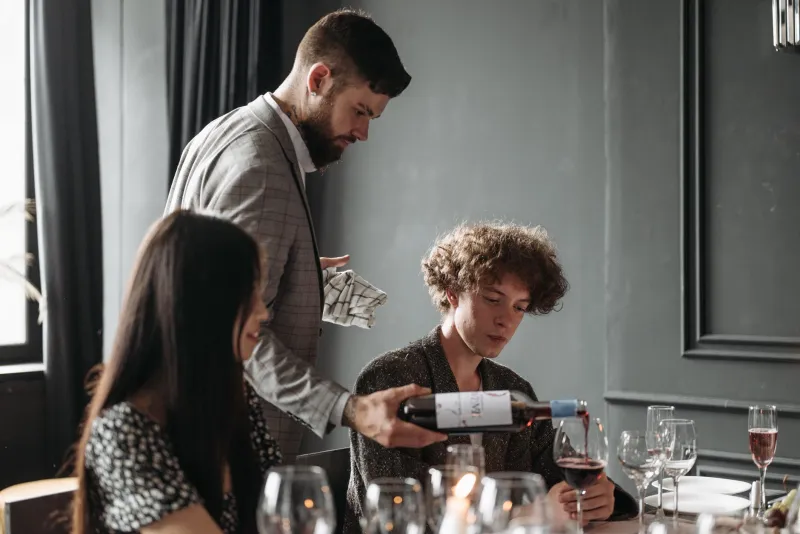
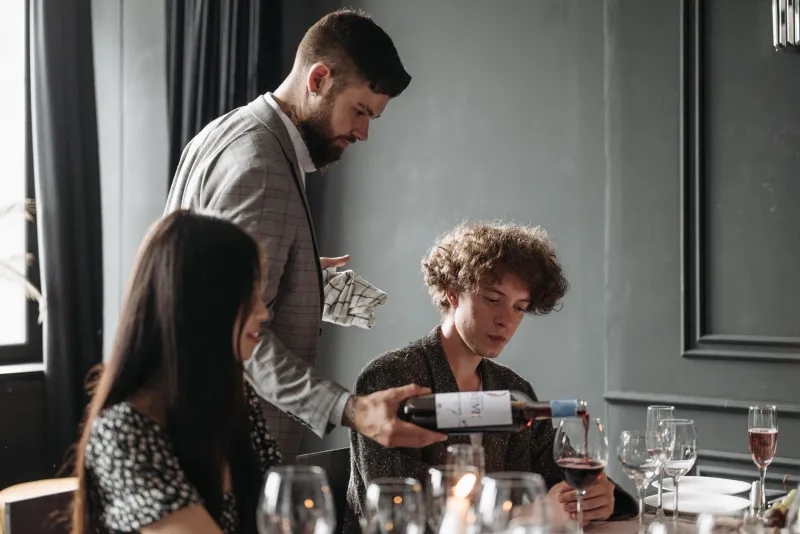
There is a moment at nearly every well-orchestrated dinner table — usually somewhere between the bread course and the entrée — when a diner sets down their glass, tilts their head slightly, and says something they did not expect to say: "I'm actually tasting this now." It is not a critique of the first pour. It is, according to several of Charlotte's most respected sommeliers, the precise moment the evening's wine experience truly begins.
This phenomenon — call it the Second Glass Theory, though its practitioners prefer the more clinical language of sensory adaptation — is shaping how Charlotte's finest restaurants structure their wine programs, how sommeliers sequence their pairings, and how knowledgeable diners are learning to approach an evening of upscale dining with greater intentionality.
The Science Behind Palate Adaptation
To understand why the second glass carries such outsized significance, it helps to understand what the palate is actually doing during the first one. Gustatory adaptation — the gradual desensitization of taste receptors to repeated stimuli — is a well-documented physiological process. When a flavor compound first contacts the tongue and olfactory system, the sensory response is vivid, even overwhelming. As exposure continues, receptors calibrate downward, and the brain begins filtering out what it perceives as ambient information.
In practical terms, this means that the first sip of a wine is experienced through a kind of sensory noise. The alcohol registers sharply. The tannins announce themselves with authority. Acidity can feel aggressive before the palate has had a chance to orient itself. What the diner experiences in those first moments is not necessarily a false impression of the wine — but it is an incomplete one.
By the second glass, something meaningfully different is occurring. The palate has adapted to the wine's fundamental architecture. The olfactory system, no longer distracted by the novelty of the initial aromas, begins identifying secondary and tertiary notes — the subtle earthiness in a Burgundy, the saline minerality threading through a coastal Chardonnay, the dried herb quality that emerges in a well-structured Rhône blend. This is the layer of the wine that sommeliers spend years learning to read, and it is the layer that most diners never reach on a single glass.
How Charlotte Sommeliers Are Designing Around This Principle
At several of Charlotte's most celebrated dining establishments, this understanding of sensory sequencing has quietly influenced how wine lists are organized and how staff guide guests through an evening. Rather than treating each glass as a standalone recommendation, thoughtful sommeliers are thinking in arcs — building from the first pour toward a more receptive second, and sometimes a revelatory third.
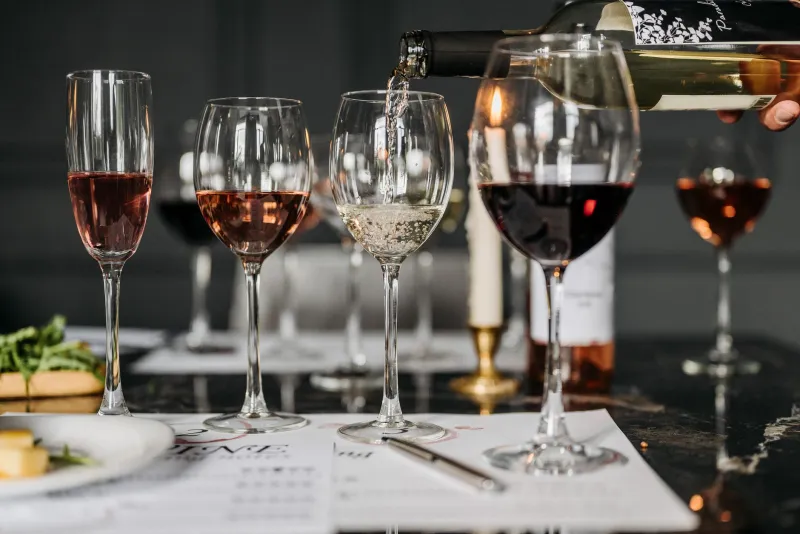
One approach gaining traction is the deliberate use of a lighter, structurally transparent wine to open the palate before a more complex selection arrives. A crisp, lower-alcohol white — perhaps a well-chosen Albariño or a delicate Loire Valley Muscadet — can serve as a kind of sensory primer, easing the palate into an attentive state without overwhelming it. By the time a more ambitious pour arrives, the diner is physiologically prepared to receive it.
Sommeliers at upscale Charlotte establishments have also noted the value of pacing. A rushed first glass, consumed before the appetizer course, rarely sets the table for genuine engagement. When the first pour is introduced alongside food — particularly dishes with moderate fat content, which help buffer the initial impact of tannins and acidity — diners tend to reach that second-glass clarity more efficiently.
The Psychological Dimension
Beyond the physiology, there is a compelling psychological argument for the second glass as the site of real wine discovery. Dining at a fine restaurant carries its own cognitive load: the assessment of the menu, the social rhythms of the table, the ambient sensory information of the room itself. In the early moments of a meal, attention is naturally divided. The first glass of wine is often received rather than truly experienced.
By the time a second pour is offered, the diner has typically settled into the evening. Conversation has found its cadence. The menu decisions have been made. The cognitive overhead of arrival has dissipated. In this more relaxed state, the wine receives something the first glass rarely does: genuine, unhurried attention.
This is not a trivial distinction. Wine appreciation, at its most rewarding, is an act of focused perception — not unlike listening to a complex piece of music. The first hearing orients you to the structure; it is the second that allows you to follow individual voices within the composition.
Practical Strategies for the Charlotte Diner
For those who dine regularly at Charlotte's finer establishments — or who host serious wine dinners at home — the implications of the Second Glass Theory are both practical and liberating.
Resist the impulse to evaluate too quickly. The instinct to form a firm opinion on the first sip is understandable, but it can shortchange a wine that requires context to reveal itself. Allow the first glass to do its preparatory work without demanding a verdict.
Engage your sommelier before the second pour. This is the moment when a brief conversation can yield the most useful guidance. Having experienced the wine once, you are now in a position to articulate what you are tasting and what you might want more — or less — of in the next selection. A skilled sommelier will use this feedback to refine the arc of the evening.
Pay attention to what changes, not just what remains. As you move from the first glass to the second, note specifically what has shifted. Has the fruit become more precise? Has a bitter edge softened? Are aromatic notes emerging that were absent before? This kind of comparative attention is, in essence, the practice of wine education — and it is available to any curious diner willing to slow down.
At home, consider a brief pause between the first and second glass. Pouring the first glass with dinner and allowing ten or fifteen minutes before the second can replicate the natural pacing of a restaurant service. The interval itself is part of the experience.
The Pour That Rewards Patience
There is something quietly elegant about the idea that the best wine experience at any given table is not the one that arrives first, but the one that follows. It runs counter to the instinct that novelty is where pleasure concentrates — and in doing so, it rewards exactly the kind of patient, attentive engagement that distinguishes genuine appreciation from mere consumption.
Charlotte's sommelier community, in its growing sophistication, has come to understand this rhythm intuitively. The wine list is not merely a menu; it is a sequence. The first glass sets the stage. The second glass is where the story begins to be told in full.
For the diner willing to approach the table with that understanding, the rewards are considerable — not in the form of a more expensive bottle or a more impressive label, but in the form of a wine, any wine, finally tasted as it was meant to be.