Cellared in Time: How Charlotte Wine Collectors Are Turning Their Cellars Into Personal Memoirs
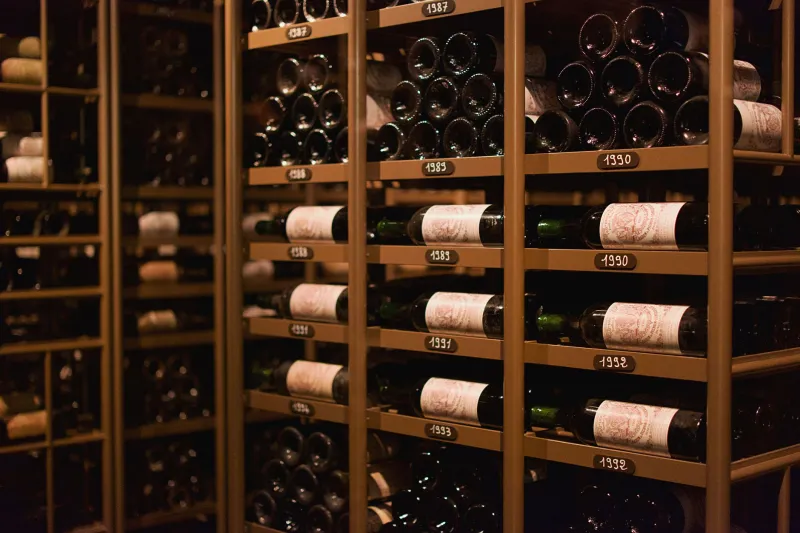
There is a particular kind of pleasure reserved for the person who descends into a well-kept cellar, runs a finger along a dusty label, and is transported — not simply to a vineyard in the Côte de Nuits or a hillside in Napa Valley, but to the precise moment in their own life when that bottle was chosen. For a select and growing community of wine enthusiasts in Charlotte, the cellar is not a passive repository. It is a living document, as deliberate and revealing as a journal.
This is the philosophy that animates some of the most thoughtful collectors in the city: the conviction that a wine library, assembled with intention, can hold the contours of a life.
More Than an Investment Vehicle
The conversation around wine collecting has long been dominated by the language of finance — futures, auction premiums, en primeur pricing. And while investment considerations remain relevant for many serious collectors, a quieter counternarrative has taken hold in Charlotte's fine dining and wine communities. Here, the most compelling cellars are distinguished not by their appraised value but by their narrative coherence.
Marcus Delray, a Charlotte-based architect who began collecting in earnest in his late thirties, articulates the distinction plainly. "I could have put money into first-growth Bordeaux and tracked the secondary market religiously," he explains. "But the bottles that mean the most to me are the ones I chose because something was happening in my life at that exact moment — a promotion, a loss, a trip that changed how I saw the world. Those are the bottles I open with ceremony."
Delray's cellar, housed in a temperature-controlled room beneath his Myers Park home, holds approximately four hundred bottles organized not by region or vintage but by chapter. A section he calls "The Italy Years" commemorates a formative period of travel through Piedmont and Tuscany. Another cluster of bottles — a half-dozen aged Rioja Reservas — marks the years his children were born.
The Architecture of Acquisition
Building a wine library that tells a personal story requires a different acquisition strategy than assembling a purely investment-driven collection. Rather than chasing scores or following critic consensus alone, narrative collectors tend to make purchases that are anchored in experience: a bottle from the winery visited on a significant trip, a case acquired on the occasion of a milestone, a producer discovered through a memorable meal at one of Charlotte's finer dining establishments.
Several local collectors credit the city's evolving restaurant wine programs with shaping their palates and, by extension, their cellars. "I had a Barolo at a dinner that completely redirected my collecting focus for three years," recalls Simone Hargrove, a collector and regular participant in Charlotte's private tasting circuit. "I went back to that restaurant, asked about the producer, and started building a small vertical. Now that section of my cellar reminds me of that entire period of discovery."
This approach demands a degree of patience and self-awareness that purely market-driven collecting does not always require. The narrative collector must ask not only whether a wine is likely to appreciate in value, but whether it will continue to hold personal meaning when opened a decade hence.
Practical Foundations: Storage and Stewardship
Of course, the most eloquent wine library is only as enduring as the conditions in which it is kept. Collectors interviewed for this piece were uniform in their emphasis on proper storage as the non-negotiable foundation of any serious cellar.
The general consensus among Charlotte collectors and local wine professionals centers on several core principles. Temperature consistency — ideally maintained between 55 and 58 degrees Fahrenheit — is paramount, as fluctuation causes premature aging and can compromise the integrity of even the most carefully chosen bottles. Humidity levels between 60 and 70 percent protect corks from drying and cracking. Vibration and light exposure, two frequently underestimated threats, should be minimized wherever possible.
For those beginning to build a collection in a Charlotte home, dedicated wine refrigeration units offer a practical entry point before committing to a full cellar build-out. Several collectors recommended consulting with a local wine professional before making significant infrastructure investments, noting that the city's wine community is notably generous with expertise.
Proper cataloguing is equally essential. Whether through a dedicated app, a spreadsheet, or a hand-maintained ledger, knowing what you have — and crucially, when to drink it — transforms a collection from a pleasant accumulation into a purposeful library. "The catalogue is where the story gets written down," Delray observes. "Without it, the narrative gets lost."
The Ritual of the Revisit
Perhaps the most distinctive pleasure of the narrative cellar is the act of revisiting a bottle at the moment of its intended opening. For collectors who have attached personal significance to specific wines, the uncorking carries a weight that purely academic appreciation cannot replicate.
Hargrove describes opening a bottle of 2009 Barossa Shiraz she had set aside to mark a decade of sobriety from a difficult period in her life. "The wine had evolved beautifully — more complex, more settled than when I put it away. I like to think I had too," she says with a measured smile. "That's the kind of resonance no wine score can quantify."
This emotional dimension of collecting is, in many ways, the aspect that most clearly distinguishes the wine library from the wine investment portfolio. The former is built to be experienced; the latter, to be liquidated. The collectors who thrive in Charlotte's wine culture tend to be those who understand that the most valuable bottle in the cellar is often the one that cannot be priced at all.
Beginning Your Own Wine Memoir
For those inspired to approach their own collecting with greater intentionality, the path forward need not begin with a significant financial commitment. A few practical principles can guide the early chapters of any wine library.
Start with occasion rather than acquisition. Before purchasing a bottle for the cellar, consider what moment or period of your life you wish it to represent. Allow travel, meals, and meaningful experiences to guide your selections as much as critical scores or market trends.
Be selective about volume. A cellar of one hundred deeply considered bottles will tell a richer story than a warehouse of algorithmically optimized cases. Quality of curation matters more than quantity.
Document as you go. Record not just the wine's technical details but the context of its acquisition — where you were, who you were with, what you were celebrating or processing. These notes will prove invaluable when the time comes to open the bottle years later.
And finally, drink with intention. The wine library is not a monument to be preserved indefinitely. It is meant to be revisited, shared, and savored — each bottle opened a new occasion to reflect on the life that was being lived when it was laid down.
In Charlotte, where the culture of fine dining and serious wine appreciation continues to deepen, the cellar is increasingly understood as one of the most personal spaces a collector can cultivate. Thread by thread, bottle by bottle, it becomes something that resembles, in the most satisfying way, a life well examined.