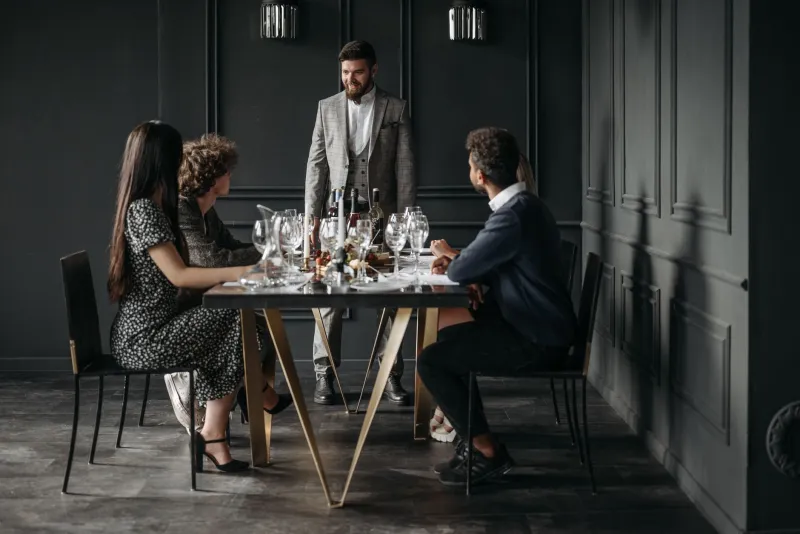
The Curious Diner's Advantage: How Charlotte Restaurants Are Making Fine Wine Discovery Irresistible
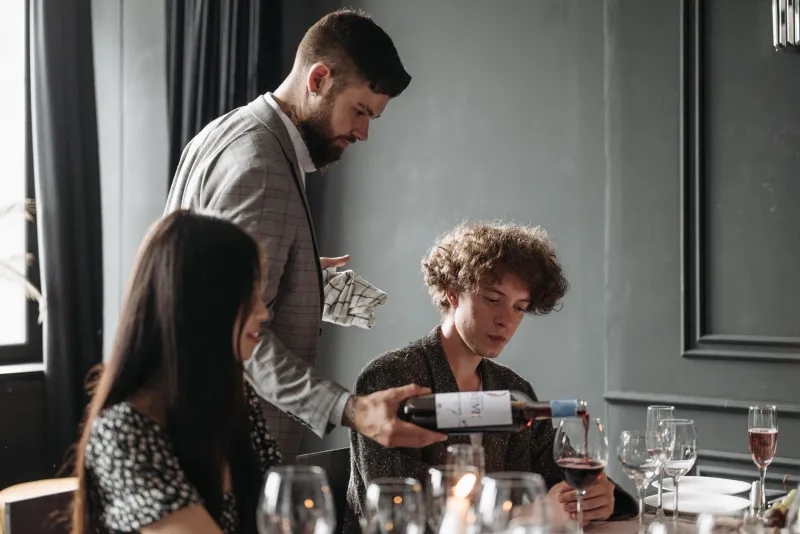
There is a particular moment that Charlotte's most attentive sommeliers have come to recognize and quietly celebrate. It arrives sometime after the first bottle has been finished, the entrées have settled in, and a diner — perhaps one who arrived with modest expectations — leans across the table and says, tell me more about that producer. It is the moment a transaction becomes a conversation, and a meal becomes a memory.
Across Charlotte's upscale dining scene, a deliberate and increasingly sophisticated effort is underway to manufacture precisely that moment. Restaurants are redesigning their wine programs not simply to sell bottles, but to engineer genuine discovery — and they are doing so by making the economics of curiosity as painless as possible.
Rethinking the Wine List as an Invitation
For decades, the fine dining wine list operated as a kind of selective gatekeeping. Leather-bound, encyclopedic, and weighted toward prestige appellations, it rewarded the already-initiated and quietly discouraged everyone else. The philosophy now gaining ground in Charlotte's most innovative establishments inverts that logic entirely.
Rather than presenting a cellar's worth of options and leaving diners to navigate the anxiety of choice, a growing number of wine directors are curating tighter, more intentional lists built around a single governing question: What will make this person want to order again?
The answer, it turns out, involves a careful calibration of price, narrative, and surprise. Restaurants are increasingly carving out dedicated sections of their lists for what industry insiders sometimes call "discovery pours" — bottles priced accessibly enough to represent minimal financial risk, but selected with the kind of care that guarantees a payoff far exceeding their cost.
The Psychology of the Second Bottle
Wine professionals who have studied guest behavior note that the decision to order a second bottle is rarely made on rational grounds alone. The first bottle, often chosen from a position of caution or familiarity, sets an emotional baseline. What follows is an opportunity — if the restaurant is paying attention.
"The first bottle is about comfort," explains one Charlotte-based sommelier who oversees a program at a well-regarded South End restaurant. "The second bottle is where trust has been established, and that's exactly when we want to introduce something the guest has never encountered before. They're relaxed. They're open. That's the moment."
This insight is driving structural changes in how some Charlotte restaurants present their wine offerings. Rather than organizing lists strictly by region or varietal — the traditional approach — certain establishments are now grouping wines by character and mood, with brief, jargon-free tasting notes written to speak to the uninitiated as fluently as to the experienced collector.
The effect is significant. When a diner can read that a Sicilian Nerello Mascalese "carries the mineral tension of a mountain hike and the warmth of a late summer afternoon," they are being offered an emotional entry point rather than a technical specification. Curiosity, predictably, follows.
Strategic Pricing as a Form of Hospitality
The business case for this approach is straightforward, even if its execution requires discipline. A restaurant that prices its discovery selections at margins that feel generous to the guest — rather than simply maximizing per-bottle revenue — often finds that overall wine revenue increases substantially. Guests who feel they have received exceptional value are more likely to order again, to return, and to recommend the experience to others.
Several Charlotte restaurateurs have embraced what might be described as a portfolio pricing philosophy: anchor the list with a handful of prestigious, higher-margin selections that lend credibility, then populate the discovery tier with bottles that punch well above their price point. The prestige selections validate the program's seriousness; the discovery selections build loyalty.
"We look at it as an investment in the relationship," says the beverage director at a prominent Uptown Charlotte establishment. "If a guest spends sixty dollars on a bottle they've never heard of and it becomes the highlight of their evening, that's worth more to us than a hundred-and-fifty-dollar sale that felt like a transaction."
This perspective reflects a broader shift in how Charlotte's dining culture has matured. As the city's restaurant scene has grown in sophistication over the past decade, so too has the expectation among its diners. A guest who regularly travels for business, who has dined in New York or San Francisco or abroad, arrives with a palate more adventurous than the local market once assumed. Restaurants that recognize and honor that sophistication — without condescending to those still developing their wine literacy — are finding a receptive audience.
The Role of the Floor Staff
No wine program, however intelligently constructed, succeeds without the people who present it. Charlotte's most effective wine-forward restaurants have invested meaningfully in staff education, ensuring that servers and sommeliers alike can speak about the discovery selections with the kind of quiet confidence that transforms a recommendation into a revelation.
This is not simply a matter of memorizing tasting notes. It requires cultivating genuine enthusiasm — the sort that is difficult to simulate and impossible to manufacture from indifference. Restaurants that host regular staff tastings, bring in producers for informal education sessions, and encourage their teams to explore the list as guests would are building a culture of authentic advocacy.
When a server can say, with evident sincerity, this is the wine I would order tonight, the guest hears something qualitatively different from a scripted upsell. They hear a person sharing something they believe in. The distinction is perceptible, and it matters enormously.
What This Means for the Charlotte Diner
For those who dine regularly in Charlotte's finer establishments, the practical implication of this movement is a quietly thrilling one. The city's best wine programs are, at this moment, actively working on your behalf — sourcing bottles from underappreciated regions, negotiating with importers for allocations of small-production gems, and pricing those selections in ways designed to reward your willingness to venture beyond the familiar.
The Grüner Veltliner from a small Austrian estate. The Txakoli poured alongside a seafood course. The Beaujolais cru that arrives at the table and recalibrates everything a diner thought they knew about that much-maligned appellation. These are the wines Charlotte's most thoughtful sommeliers are championing, and they are available to anyone willing to say, simply, surprise me.
That, in the end, is the invitation being extended. The restaurants have done the work. The lists have been curated with intention. The staff has been trained with care. All that remains is the diner's willingness to lean into the unknown — and the reasonable confidence, in Charlotte's best dining rooms at least, that the unknown will reward them generously.