From the Restaurant Table to Your Own Cellar: Building a Collection One Dinner at a Time
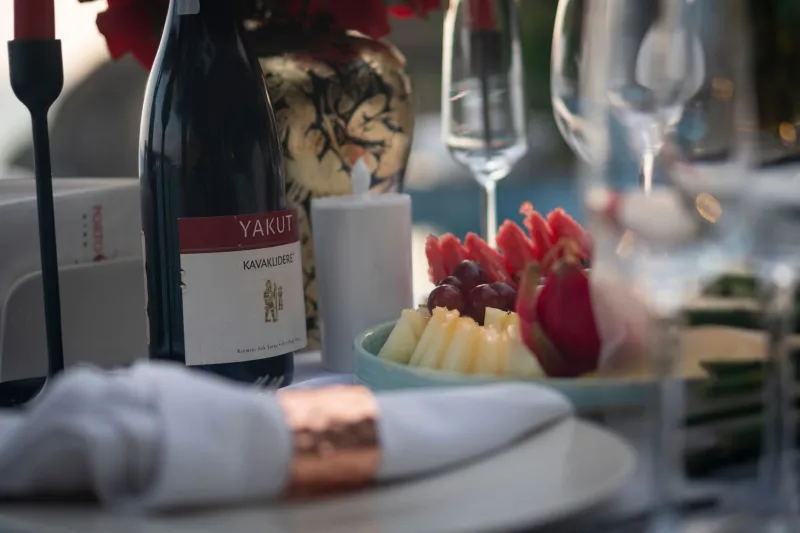
No wine list, however carefully curated, can replicate the experience of encountering a bottle under ideal conditions. The right glass arrives at precisely the right moment — the food is perfectly calibrated, the company is engaged, the evening has a quality of ease that opens the palate as readily as it opens conversation. You take a sip and something registers that goes beyond simple pleasure. You want to know this wine again.
This is how the most meaningful cellars begin. Not with a spreadsheet or a critic's allocation list, but with a meal at one of Charlotte's premier dining establishments and a bottle that simply refused to be forgotten.
The Restaurant as Discovery Engine
Retail wine shopping, for all its accessibility, operates under conditions that are fundamentally at odds with genuine discovery. You are standing in an aisle, perhaps slightly overwhelmed, making decisions based on label design, shelf talker ratings, and price anchoring. The wine has been separated from its natural context — the table, the food, the occasion — and reduced to a product.
A restaurant wine program, by contrast, is a curated environment. The bottles have been selected by someone with a defined point of view. They are presented alongside food designed to complement them. The sommelier is available to provide context, history, and recommendation. The conditions for discovery are, in every measurable way, superior.
Charlotte's most ambitious wine programs — at establishments where the cellar is treated as a creative department rather than a support function — are particularly fertile ground for this kind of encounter. Diners who approach these lists with genuine curiosity and a willingness to venture beyond their comfort zones consistently report that their most significant wine discoveries have occurred not at a wine shop or a tasting room, but at a dinner table.
Building a System for Tracking What You Love
The challenge, of course, is that a memorable bottle encountered mid-meal is easily forgotten by morning. The name of the producer, the vintage, the appellation — details that seemed vivid at the table have a way of blurring in retrospect. Building a cellar from restaurant discoveries requires a simple but consistent documentation habit.
The most practical approach involves photographing the label or the wine list entry at the moment of encounter. Most smartphones handle this with minimal disruption to the meal, and the image captures everything you will need for later research: producer, vintage, appellation, and often the importer, which can be critical when tracking down a bottle through domestic retail channels.
Supplement the photograph with a brief note — either in a dedicated app or a simple voice memo recorded after the meal — that captures your sensory impressions, the food it accompanied, and the specific context of the evening. Over time, these notes become a personal archive of your palate's development, a record of where your taste has traveled and in which directions it continues to be drawn.
Navigating the Path from Restaurant Discovery to Retail Purchase
Once a wine has been identified as worth pursuing, the process of acquiring it for your home collection requires some familiarity with how the American wine distribution system operates. Many of the bottles featured at Charlotte's finest restaurants arrive through small importers and regional distributors who supply the on-premise trade. These same producers frequently have retail distribution, though not always through the most obvious channels.
Your first resource is the restaurant itself. A sommelier who has guided you to a wine you genuinely love will often be able to tell you where that bottle can be purchased at retail, or at minimum who the importer is. This is not an unusual request, and most wine professionals are genuinely pleased to facilitate a guest's continued relationship with a producer they have championed.
Beyond the restaurant, specialty wine retailers in Charlotte who focus on small-production and artisan wines are likely to have relationships with the same importers supplying the city's top dining establishments. Building a relationship with one or two knowledgeable retail buyers — sharing your restaurant discoveries, asking for comparable recommendations — creates a feedback loop that accelerates your cellar's development considerably.
For wines with limited domestic distribution, direct purchase from the winery's mailing list or through wine club membership may be the most reliable path. Many small producers, particularly those in California and Oregon, maintain allocation lists for dedicated customers who have demonstrated genuine interest.
Curating a Cellar That Reflects Your Dining Life
The home collection that emerges from years of restaurant discovery has a character that no retail-assembled cellar can replicate. Each bottle carries a provenance — not merely geographic, but experiential. You know precisely where you encountered it, what you were eating, who was at the table. The wine becomes inseparable from the memory of the meal.
This is the quality that distinguishes a meaningful cellar from a simple inventory of bottles. The former is a personal memoir expressed in glass and cork. The latter is a storage solution.
As your collection grows, you will likely notice patterns in your own taste that were not visible when you were making individual selections in isolation. A preference for a particular region's acid structure. A recurring attraction to wines made with minimal intervention. An affinity for a specific set of producers whose sensibility aligns with your own. These patterns are not accidents; they are the accumulated expression of your palate's education, conducted one remarkable dinner at a time.
Charlotte's finest restaurants are, among many other things, the city's most generous wine educators. The tuition is paid in the pleasure of a great meal. The curriculum is whatever arrives in the glass. And the collection that results belongs entirely to you.