Amber in the Glass: Why Orange Wine Has Earned Its Place at the Serious Dinner Table
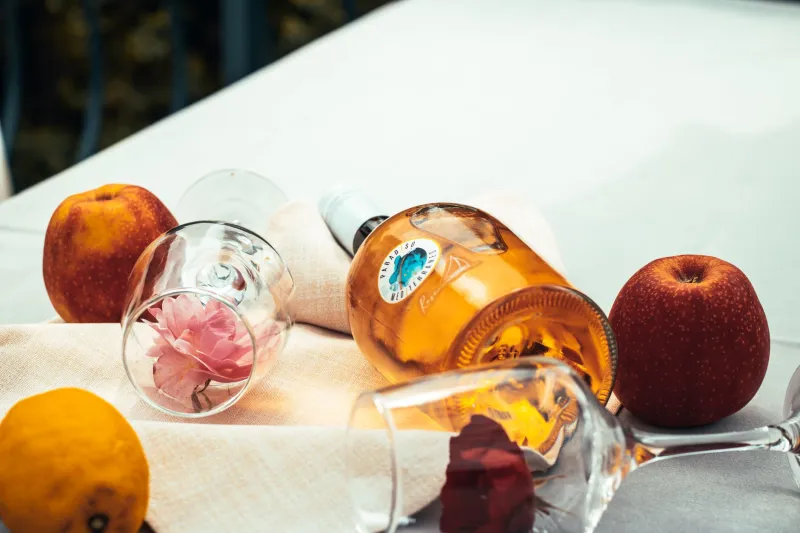
Let us dispense with the most common misconception immediately: orange wine is not made from oranges. It is, in fact, white wine made the way red wine is made — with extended skin contact during fermentation, a process that extracts tannins, phenolic compounds, and pigment from the grape skins, producing a wine that ranges in color from pale gold to deep amber and in flavor from lightly structured to bracingly complex.
This ancient technique, practiced for millennia in the Republic of Georgia and rediscovered by Italian natural wine pioneers in the 1990s, has migrated steadily into the consciousness of American sommeliers over the past decade. Today, it occupies a growing and increasingly respected position on wine lists from New York to Los Angeles — and, with quiet momentum, in Charlotte's own evolving dining scene.
The question is no longer whether orange wine deserves serious attention. It does. The more interesting question is how to think about it, pair it, and — for those hosting a dinner party with genuine ambition — how to select and serve it with confidence.
What Makes Orange Wine Different
Conventional white wine is produced by pressing grapes and immediately separating the juice from the skins before fermentation. The result is a wine whose character is defined almost entirely by the grape's juice. Orange wine inverts this logic, allowing the skins to remain in contact with the juice for anywhere from a few days to several months. The extended maceration imparts qualities that white wine enthusiasts and red wine lovers alike may find disorienting at first encounter — and revelatory shortly thereafter.
Expect tannin. Not the aggressive, drying tannin of a young Barolo, but a structural presence that gives the wine grip and longevity on the palate. Expect oxidative notes: dried apricot, beeswax, walnut, chamomile, and in the more ambitious examples, something approaching the complexity of aged Sherry. Expect acidity that cuts cleanly through rich foods. And expect, above all, the kind of textural weight that makes orange wine uniquely suited to the table rather than the cocktail hour.
Tasting Notes: A Spectrum Worth Exploring
The range within the orange wine category is considerable, and understanding its breadth helps enormously when selecting bottles for guests with varying levels of experience.
Entry-level approachability: Ramato-style Pinot Grigio from Friuli-Venezia Giulia, Italy, offers a gentle introduction — copper-pink in color, with notes of peach skin, dried rose, and a subtle tannic finish that surprises without alarming. Bottles from producers like Marco Felluga or Colterenzio are available through specialty retailers and offer excellent value at the $20–$35 range.
Mid-range complexity: Georgian Rkatsiteli or Mtsvane from producers such as Pheasant's Tears or Iago's Wine present the fuller expression of the style — deeper amber, pronounced tannin, notes of quince, saffron, and dried citrus peel. These wines demand food and reward contemplation. Expect to spend $35–$60 for bottles of genuine character.
For the committed enthusiast: Gravner's Ribolla Gialla from Friuli, arguably the wine that reintroduced skin-contact whites to the modern world, represents the pinnacle of the category. Extended maceration, amphora aging, and minimal intervention produce a wine of extraordinary depth — dried mango, tobacco, lanolin, and a finish that persists for minutes. At $80–$120 per bottle, it is a serious investment and a serious wine.
Pairing Beyond Convention
Here is where orange wine genuinely disrupts the established order of pairing logic. Its tannin structure allows it to stand alongside dishes that would overwhelm a conventional white, while its acidity and aromatic complexity prevent it from competing with the food in the way a full-bodied red might.
Consider the following pairings for your next dinner party:
- Roasted root vegetables with tahini and pomegranate: The earthy, slightly bitter notes of a Georgian Rkatsiteli mirror the vegetable's caramelized depth, while the wine's acidity lifts the tahini's richness.
- Miso-glazed salmon or black cod: The umami intensity of fermented miso finds a natural counterpart in orange wine's oxidative notes. This is a pairing that feels inevitable once experienced.
- Aged hard cheeses: The tannin in a well-made orange wine performs the same structural role as a red wine alongside a 24-month Comté or aged Gouda, making it genuinely versatile on a cheese board.
- Spiced lamb flatbread or shawarma: The wine's aromatic complexity — those dried fruit and spice notes — harmonizes with Middle Eastern seasoning in ways that neither a Chardonnay nor a Syrah can fully achieve.
- Charcuterie with pickled accompaniments: Acid-forward condiments that challenge most wines are managed gracefully by orange wine's own pronounced acidity and structural tannin.
Where to Find Orange Wine in Charlotte
Charlotte's restaurant community has been quietly expanding its engagement with skin-contact whites, and several establishments now offer thoughtful selections.
Bardo in Plaza Midwood maintains a rotating selection of natural and skin-contact wines that reflects the team's genuine enthusiasm for the category. Ask specifically about their current orange wine offerings — the staff's knowledge is reliable and their enthusiasm authentic.
Leah & Louise at Camp North End incorporates orange wine into a broader beverage program defined by intentional curation. South African skin-contact Chenin Blanc, when available, is particularly worth requesting alongside the kitchen's more complex preparations.
Kindred in Davidson periodically features orange wine by the glass as part of its commitment to introducing guests to lesser-known styles. The pairing suggestions offered by the floor team here are consistently well-considered.
For retail exploration, Wooden Vine Wine & Spirits and The Hoppin' Grape in Charlotte carry curated selections of skin-contact wines, with staff prepared to guide both newcomers and experienced collectors.
A Final Argument for the Adventurous Host
Serving orange wine at a dinner party is an act of editorial confidence. It signals that you have moved beyond the expected and are prepared to offer your guests something that will generate genuine conversation — about what they are tasting, about how wine is made, and about the assumptions we carry to the table without examining them.
The wine world is, at its finest, a continuous education. Orange wine, with its ancient lineage and thoroughly modern relevance, is one of its most compelling current chapters. Pour it with conviction, pair it with care, and allow your guests the pleasure of being surprised.