Pour Decisions: How Charlotte's Top Sommeliers Are Rewriting the Rules of Wine Service
For generations, the sight of a sommelier lifting a bottle toward candlelight before tilting it slowly into a wide-bellied decanter represented the gold standard of fine dining theater. It was ritual as much as technique—a performance that signaled seriousness, knowledge, and care. In Charlotte's evolving upscale dining scene, however, that ritual is being examined with fresh eyes. A growing number of wine directors are asking a pointed question: is traditional decanting always serving the wine, or is it sometimes serving the room?
The answer, it turns out, is far more nuanced than the industry long assumed.
The Case Against Automatic Decanting
Conventional wisdom has long held that most red wines—and certain full-bodied whites—benefit from extended exposure to air before service. The logic is sound in principle: oxygen interaction softens tannins, allows volatile compounds to dissipate, and encourages a wine's aromatic profile to fully unfurl. Yet the blanket application of this principle is precisely what some of Charlotte's most respected wine professionals are pushing back against.
"There is an assumption baked into traditional service that more air is almost always better," explains one wine director at a prominent South End establishment who asked to speak candidly without attribution. "But when you're working with a wine that has genuine age on it—something with fifteen or twenty years of bottle development—aggressive decanting can strip away the very complexity your guest paid to experience. Those tertiary notes, the earth, the dried fruit, the subtle oxidative qualities—they're fragile. You can blow them off in twenty minutes if you're not careful."
This concern is particularly acute with older Burgundies and aged Riojas, wines whose appeal lies precisely in their delicacy. Several Charlotte sommeliers now practice what they describe as a "minimal intervention" philosophy for mature bottles, opting for a brief pour into a clean glass rather than any extended decanting period.
When Aeration Becomes the Answer
If restraint governs the treatment of older wines, the calculus shifts considerably for younger, more tannic bottles. A robust Napa Cabernet Sauvignon with only three or four years of age, or a structured Barossa Shiraz still showing significant grip, can genuinely benefit from an extended introduction to oxygen. Here, the debate pivots not to whether to aerate, but how.
The rise of mechanical aerators—devices that force wine through a narrow channel, introducing oxygen rapidly as it pours—has divided the Charlotte sommelier community. Proponents argue that a quality aerator can accomplish in seconds what an hour in a decanter might achieve, offering both efficiency and control. Critics counter that the process is too blunt, introducing oxygen in a manner that lacks the subtlety of a slow, deliberate decant.
"I think aerators have their place," says a beverage director at one of the city's established Uptown dining rooms. "For a mid-week dinner when a guest orders a young, tannic red and wants it ready immediately, an aerator is a practical tool. But I wouldn't use one on anything I consider a serious bottle. The interaction is too aggressive. You lose nuance."
This tension between practicality and precision reflects a broader conversation happening in fine dining nationally, one that Charlotte's wine community is engaging with on its own terms.
Glassware as a Serving Technique
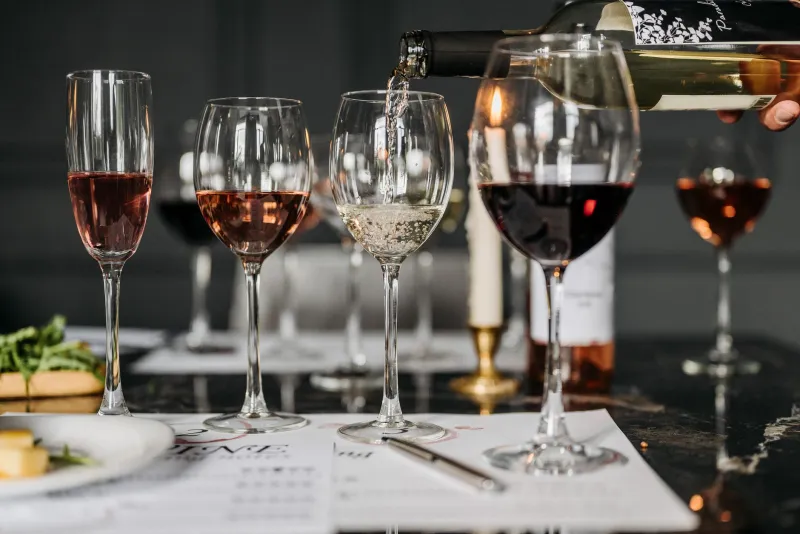
Perhaps the most underappreciated variable in the decanting debate is the glass itself. Several Charlotte wine programs have made significant investments in expanded glassware inventories, recognizing that the shape and volume of a vessel can function as a form of controlled aeration in its own right.
Large-format Burgundy glasses, with their generous bowl and wide opening, allow a wine to breathe naturally as it sits at the table, making extended pre-service decanting less necessary for certain bottles. Conversely, a tighter, more tulip-shaped glass can concentrate aromatics and preserve the more volatile compounds that dissipate quickly when wine is exposed to a large surface area.
"We've moved away from a one-size approach entirely," notes a wine professional at a well-regarded dining destination in the Dilworth neighborhood. "The glass selection is part of the service conversation now. Before we open anything, we're thinking about the wine's age, its structure, its provenance—and all of that informs both the vessel we choose and how, or whether, we decant."
This level of intentionality extends to pour timing as well. Rather than decanting a bottle thirty minutes before a table sits down—a common backstage practice—some programs now prefer to open bottles tableside and monitor their development through the course of a meal, adjusting service accordingly.
The Sommelier as Educator
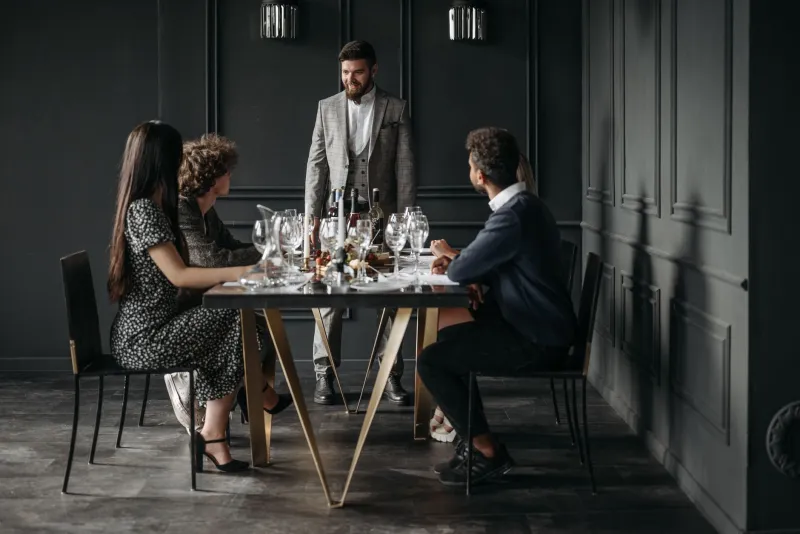
What distinguishes Charlotte's most progressive wine programs is not simply the techniques they employ, but their willingness to bring guests into the conversation. The old model of the omniscient sommelier presenting decisions as fait accompli is giving way to something more collaborative.
Guests at several of the city's top establishments now find themselves invited into a brief dialogue about their preferences—how they like their wine to present, whether they enjoy the evolution of a bottle over the course of an evening, whether they have previous experience with the producer or vintage. This information shapes service decisions in real time.
"Wine education and wine service have to work together," says one sommelier whose program has earned consistent recognition in regional dining circles. "If a guest doesn't understand why we're choosing not to decant a particular bottle, the whole experience falls flat. But when they understand that we're trying to preserve something—that we're making an active choice on their behalf—the appreciation changes entirely."
What This Means for the Charlotte Dining Experience
For guests navigating Charlotte's fine dining landscape, this evolving philosophy has practical implications. The presence of a decanter on a service trolley is no longer a reliable signal of a wine program's sophistication. Equally, its absence should not be read as an oversight.
The most thoughtful programs in the city are those in which every service decision—decant or not, which glass, how long to wait—reflects genuine consideration of the specific wine in front of the team. That level of attention, applied consistently, is what separates a wine list from a wine experience.
At Table & Twine, we believe that understanding the reasoning behind these choices makes every glass more rewarding. The next time a sommelier in one of Charlotte's dining rooms pauses before reaching for the decanter, consider asking why. The answer will likely tell you everything you need to know about the program—and about the bottle you're about to enjoy.