Beyond the Map: Why Obsessing Over Terroir Is Holding Your Palate Hostage
There is a particular kind of confidence that settles over a wine enthusiast the moment they learn to speak fluently in terroir. The chalk of Chablis. The volcanic minerality of Etna Rosso. The iron-laced clay of Pomerol. These are the coordinates by which serious drinkers have long navigated the wine world, and for good reason — geography does shape flavor in profound and measurable ways. But somewhere between education and obsession, a boundary was crossed. What began as a useful framework for understanding wine has, for many Charlotte enthusiasts, calcified into a rigid orthodoxy that quietly closes more doors than it opens.
The terroir trap is real, and it is time to examine it honestly.
What Terroir Gets Right — And Where It Stops
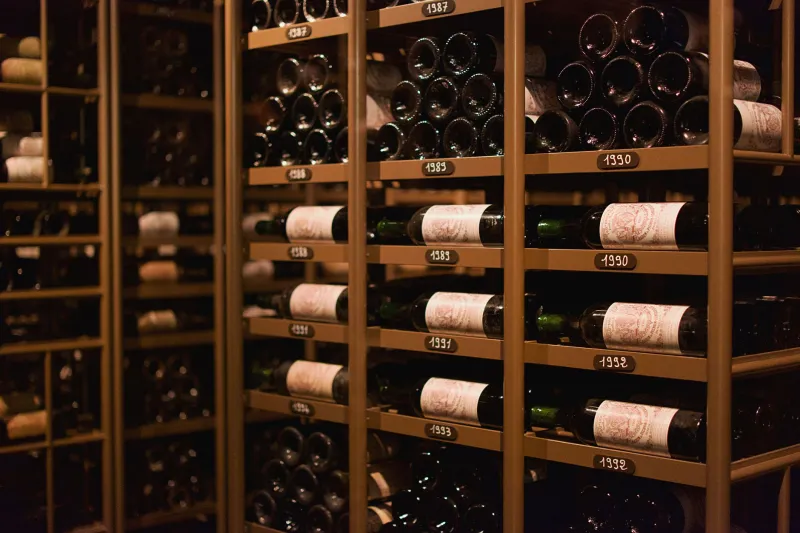
To be clear, the concept of terroir is not without merit. The idea that a wine carries within it the fingerprint of its place — the soil composition, the slope of the land, the microclimate, the centuries of viticultural tradition — is one of the most romantic and scientifically grounded notions in all of gastronomy. When you sip a well-aged Burgundy and detect that precise combination of forest floor, dried rose, and iron-tinged earth, you are, in a very real sense, tasting a specific patch of French countryside. That is extraordinary.
The problem arises not with terroir itself, but with the elevation of geographic origin into a kind of moral hierarchy. When a wine's legitimacy becomes contingent upon the prestige of its appellation rather than the quality of what is actually in the glass, the drinker has surrendered their palate to a committee of cartographers.
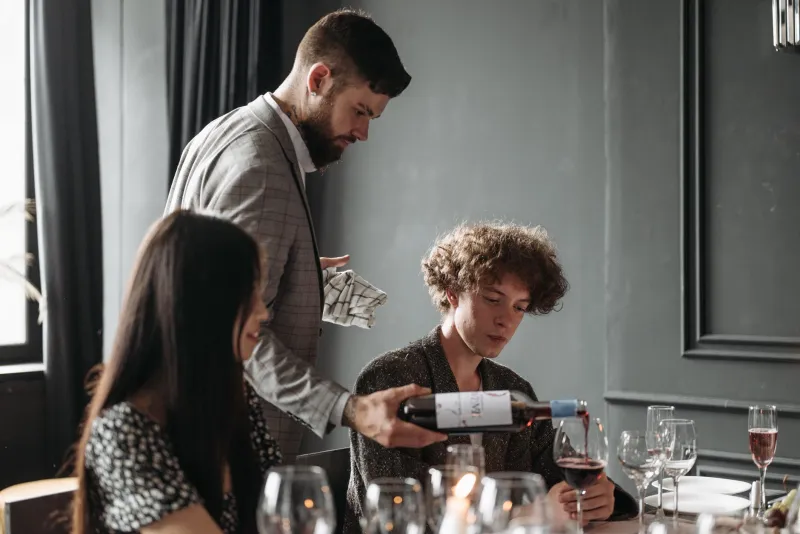
Charlotte's fine dining scene has matured considerably over the past decade, and with that maturity has come a more sophisticated wine culture. Yet even here, in restaurants along South End and in the private dining rooms of Uptown, one still encounters the reflexive dismissal of wines that fall outside the canonical regions. A Malbec from Uruguay is met with polite skepticism. A Grenache from the high desert of New Mexico raises an eyebrow. A field-blended natural wine from a small Oregon producer without an official AVA designation is quietly passed over in favor of something with a more recognizable postal code.
This is the trap in action.
The Winemakers Who Refused the Boundaries
Consider what happens when a skilled winemaker deliberately ignores the received wisdom about where certain grapes belong. The Super Tuscans of the 1970s and 1980s were, at their inception, technically illegal by Italian wine law — blends of Cabernet Sauvignon and Merlot with Sangiovese, produced outside the Chianti classification system. Critics rooted in appellation orthodoxy were deeply skeptical. The wines, of course, became some of the most celebrated and collectible bottles of the twentieth century.
More recently, winemakers in unexpected corners of the globe have been producing bottles that challenge every assumption about geographic determinism. The high-altitude vineyards of Argentina's Mendoza have long since earned serious attention, but producers in Patagonia and Salta are now crafting wines that rival the finest expressions from far more storied appellations. In the American Southwest, a handful of pioneering producers are coaxing genuinely compelling Rhône-style wines from desert soils that no French négociant would recognize as viable terroir.
In the Willamette Valley, winemakers are experimenting with grape varieties historically associated with Alsace and Germany, yielding Rieslings and Grüner Veltliners that possess their own distinct character — neither European nor conventionally Oregonian, but something altogether new. To dismiss these wines because they lack the pedigree of their old-world counterparts is to mistake the map for the territory.
The Charlotte Diner's Particular Opportunity
Charlotte occupies an interesting position in the American fine dining landscape. It is a city that has come to wine culture relatively recently in the national conversation, which means its enthusiasts carry fewer inherited prejudices than those in cities with longer, more entrenched wine traditions. This is an advantage that should be embraced rather than abandoned in pursuit of borrowed sophistication.
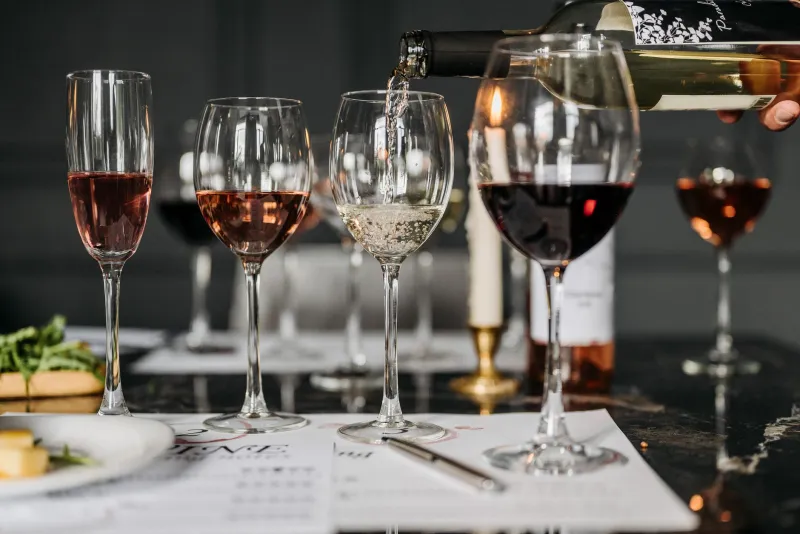
The sommeliers and beverage directors at Charlotte's most thoughtful restaurants are increasingly curating lists that reflect this openness. When a wine program features a Georgian amber wine alongside a Napa Cabernet, or places a Chilean Carignan in conversation with a Crozes-Hermitage, it is not being contrarian — it is being genuinely educational. It is inviting the diner to taste with their own tongue rather than with someone else's reputation.
For those who dine regularly at the city's better tables, the invitation is worth accepting. Order the wine you do not recognize. Ask the sommelier about the producer whose name you cannot pronounce. Allow yourself to be surprised by a bottle from a region that does not appear in the classic wine education curricula.
Practical Terroir: Using Geography as a Compass, Not a Cage
None of this is to suggest that terroir should be abandoned as a concept. Rather, it should be returned to its proper function: a starting point for curiosity, not a finishing line for judgment.
When you understand why Burgundy's Pinot Noir tastes the way it does — the cool climate, the limestone-heavy soils, the centuries of clonal selection — you are better equipped to appreciate a Pinot Noir from the Eola-Amity Hills of Oregon or the Sonoma Coast of California that shares certain qualities while expressing its own distinct identity. Geographic knowledge becomes a vocabulary rather than a verdict.
The same logic applies to blending. The finest Bordeaux-style blends produced outside of Bordeaux — whether in Napa, Coonawarra, or the Maipo Valley — are not inferior for their geographic displacement. They are, in many cases, the product of winemakers who understood the traditional model deeply enough to translate it into an entirely different context. That translation requires skill, and the resulting wines deserve to be evaluated on their own terms.
A More Rewarding Glass Awaits
At Table & Twine, we believe that the finest dining experiences are those that expand what you thought possible — in flavor, in pairing, in discovery. Wine is, at its most essential, a conversation between a grape, a place, a person, and a moment. When the place becomes the only variable that matters, the conversation grows narrow.
Charlotte's wine culture is too vibrant, and its enthusiasts too genuinely curious, to be constrained by a framework that was designed for a different era of wine production. The world's vineyards have never been more experimental, more diverse, or more willing to challenge assumptions about what grows where and why it matters.
The most sophisticated thing a serious wine drinker can do today is set down the atlas, pick up the glass, and simply taste what is in front of them. The terroir will reveal itself — or it will reveal something better. Either way, the palate wins.