Air, Time, and Evidence: How Charlotte's Top Sommeliers Are Rethinking the Decanter
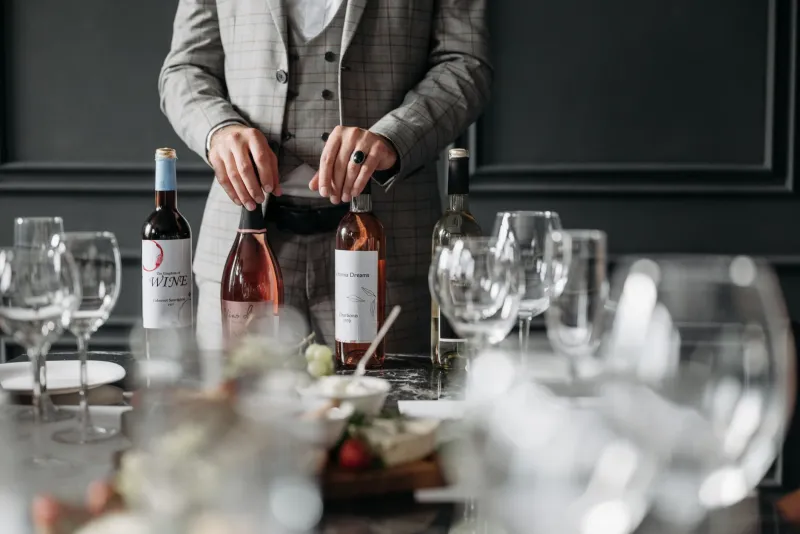
There is something undeniably theatrical about the decanter. Set on a white-clothed table beneath warm restaurant lighting, it signals occasion, patience, and a certain reverence for the wine within. For decades, the act of decanting has been treated as self-evidently correct—a professional courtesy extended to any bottle of sufficient age or reputation. Charlotte's leading sommeliers, however, are beginning to ask a more disciplined question: does it actually work, and if so, for whom?
The answer, it turns out, is far more nuanced than tradition has ever cared to acknowledge.
The Ritual Without the Research
Conventional decanting wisdom rests on two broad premises. The first is that older wines, particularly those from Bordeaux or the Rhône Valley, carry sediment that should be separated from the liquid before service. The second—and far more contested—is that exposing wine to oxygen softens tannins, releases aromatic compounds, and generally renders the wine more expressive and pleasurable.
For much of the twentieth century, neither claim was subjected to rigorous scrutiny in a dining context. Sommeliers learned the practice from their predecessors, refined their technique, and passed it forward. The decanter became a symbol of expertise rather than an instrument of inquiry.
That posture is now being challenged in Charlotte's most serious dining rooms, where a new generation of wine professionals is treating aeration not as an article of faith but as a variable to be tested.
What the Science Actually Suggests
The chemistry of wine aeration is well-established in academic enology, even if it has rarely filtered into restaurant practice with any precision. When wine contacts oxygen, a cascade of reactions begins. Volatile sulfur compounds—responsible for the reductive, closed character that many wines exhibit immediately after opening—dissipate relatively quickly. Tannin molecules begin to polymerize, which can soften the perception of astringency. Aromatic esters evolve, sometimes opening the wine's bouquet, sometimes accelerating its decline.
The critical variable is time. A young, tannic Cabernet Sauvignon from Napa might genuinely benefit from forty-five minutes in a wide-bottomed decanter. A delicate, older Burgundy—already fragile, its tannins long since resolved—may begin to lose its most expressive qualities within fifteen minutes of excessive air exposure. And certain wines, particularly those made in a reductive style by design, may never benefit from aeration at all.
Charlotte sommeliers who have engaged with this research are now building service protocols around specific wine profiles rather than general categories.
Blind Tastings as the New Standard
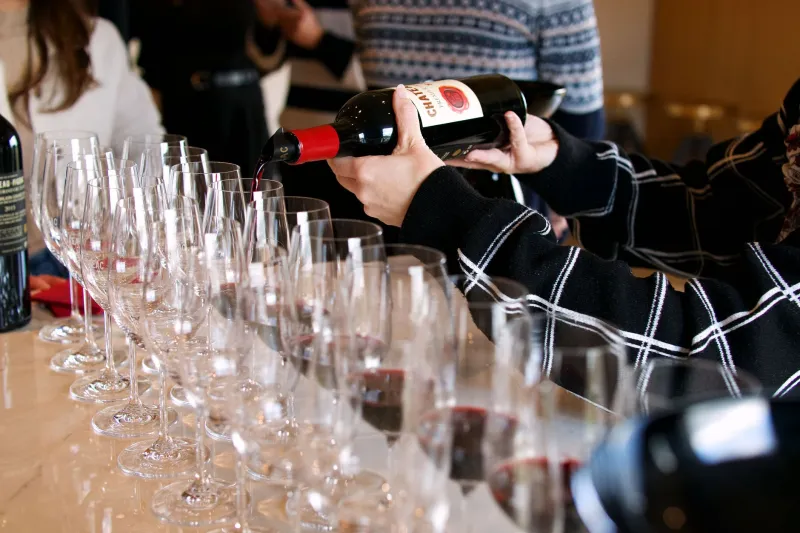
Perhaps the most significant shift occurring in Charlotte's fine dining community is the formalization of blind aeration trials. Rather than relying on received wisdom, several wine programs have begun conducting structured tastings in which the same bottle is served at staggered intervals—immediately after opening, after twenty minutes, after forty-five, and at the ninety-minute mark—with evaluators tasting blind at each stage.
The results have produced some genuinely counterintuitive findings. Wines assumed to require extended decanting have occasionally peaked at the twenty-minute mark, declining noticeably thereafter. Bottles dismissed as too young or too robust for immediate enjoyment have, in certain cases, shown their best character within minutes of opening.
This empirical approach is not without its complications. Wine varies by vintage, by storage history, and by the conditions of a given service. A bottle that peaked at forty minutes on one occasion may behave differently on another. But the discipline of testing, rather than assuming, represents a meaningful departure from how aeration has historically been managed.
Equipment Innovation and Precision Temperature
The conversation around decanting has also expanded to include the tools themselves. The traditional glass decanter, elegant as it is, offers little control over the rate of aeration or the temperature of the wine during the process. As Charlotte's wine culture has grown more sophisticated, so too has interest in equipment that addresses these limitations.
Aeration devices that introduce micro-bubbles of oxygen directly into the pour have become more common in both retail and restaurant settings, offering a controlled alternative to the passive exposure of a standard decanter. Some sommeliers have begun using narrow-necked decanters to slow the rate of oxygenation for more delicate wines, while reserving wide-based vessels for structured reds that genuinely benefit from aggressive air contact.
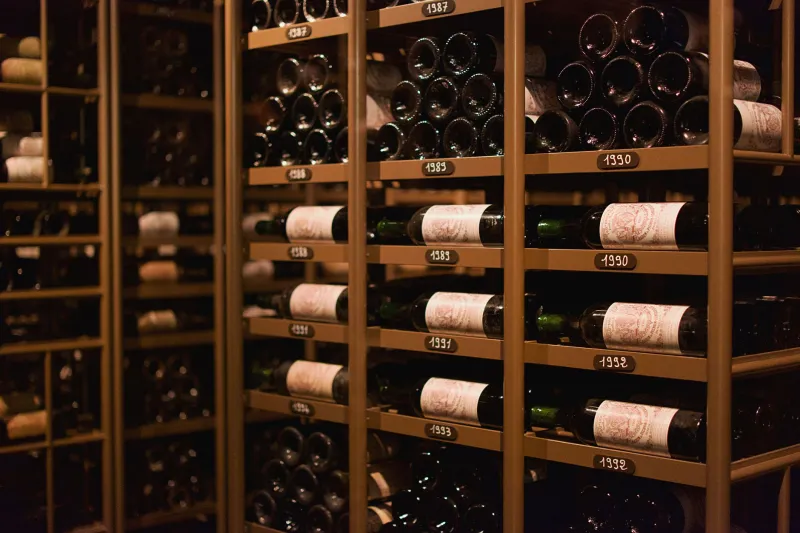
Temperature management has emerged as an equally important consideration. A wine decanted at room temperature—particularly in Charlotte's warmer months—may evolve far more rapidly than one maintained at a controlled cellar temperature throughout the process. Several restaurants have begun decanting in temperature-regulated environments or returning decanters to cooled surfaces between courses, a practice that would have seemed unnecessarily fussy a decade ago but now reflects a more complete understanding of how oxygen and heat interact.
What This Means for the Serious Diner
For guests at Charlotte's upscale dining establishments, the evolution of decanting practice offers both a practical benefit and an invitation to greater engagement. The practical benefit is straightforward: wine served with a thoughtful aeration protocol is more likely to be presented at the precise moment of its best expression, rather than arbitrarily early or late in its post-opening development.
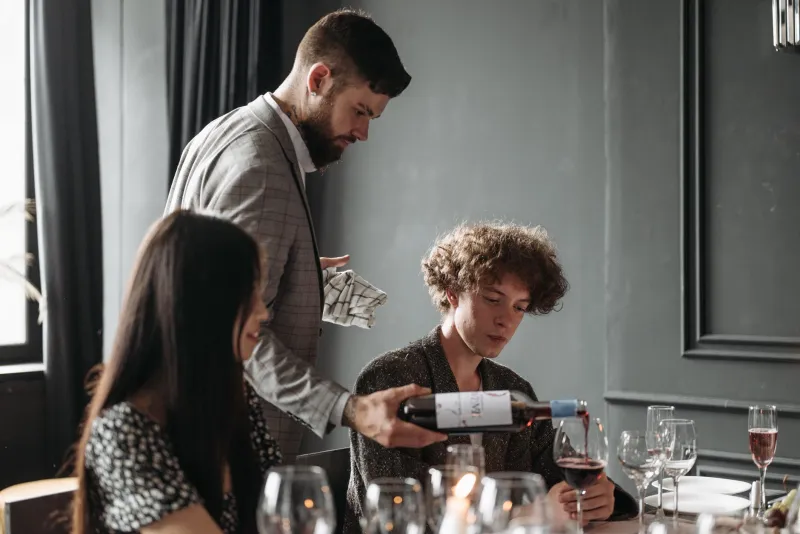
The invitation is subtler but equally valuable. Diners who understand that decanting is a considered decision—not a reflexive one—are better positioned to have meaningful conversations with their sommelier about what a given bottle actually needs. Asking whether a wine has been tasted prior to decanting, or how long it has been in the vessel, is no longer an eccentric question. In Charlotte's better dining rooms, it is precisely the kind of inquiry that a knowledgeable sommelier will welcome.
The ritual, in other words, need not disappear. A beautifully executed decant, performed with genuine intention and informed by evidence, remains one of the more graceful gestures in fine dining service. What is changing is the reasoning behind it—and that shift, quiet as it is, represents a meaningful maturation in how this city's wine culture approaches the glass.
The Decanter Reconsidered
Charlotte's dining scene has always had an appetite for elevation, a willingness to absorb the best practices of established wine capitals and adapt them to a distinctly Southern context. The current rethinking of decanting is consistent with that tradition. It is not iconoclasm for its own sake but rather the natural result of a community that takes wine seriously enough to question what it has always been told.
The decanter is not going anywhere. But in Charlotte's most respected dining rooms, it is no longer brought to the table on reflex. It arrives, instead, as the conclusion of a considered process—one shaped by science, tested by experience, and ultimately guided by a single unwavering standard: what does this particular wine, on this particular evening, actually need?