A New Set of Expectations: How Younger Wine Enthusiasts Are Reshaping Fine Dining in Charlotte
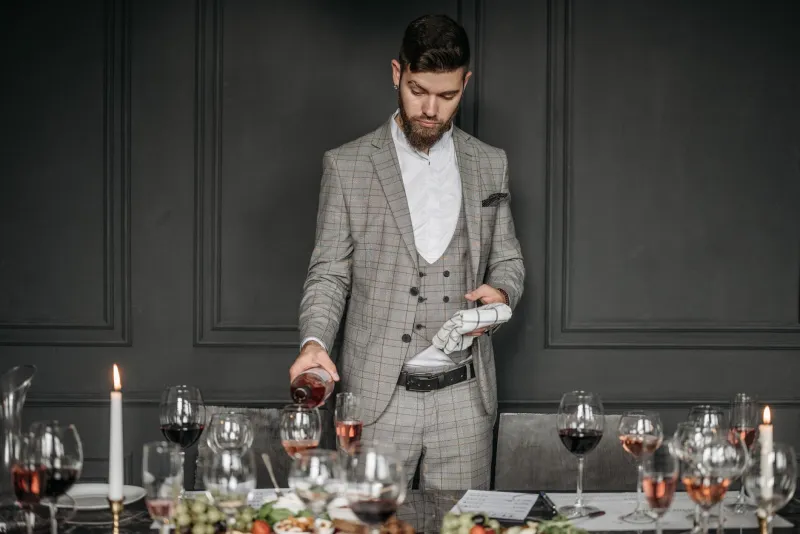
Fine dining in Charlotte has, for much of its history, operated according to a fairly stable set of conventions. The wine list arrives in leather. The sommelier maintains a certain professional distance. The Bordeaux and Burgundy sections anchor the cellar. The ceremony of the table communicates, above all else, that what is happening here is serious.
Something is shifting.
The shift is not a collapse of standards or an abandonment of quality. It is, more precisely, a renegotiation—one being driven by a cohort of younger wine drinkers who have arrived at the fine dining table with a different educational background, a different set of aesthetic preferences, and a fundamentally different relationship to the rituals that have long defined the experience.
Charlotte's wine community is watching this renegotiation unfold in real time, and the most thoughtful voices in that community are not alarmed. They are, in many cases, genuinely engaged.
The Education Happened Elsewhere
One of the most consequential distinctions between younger wine drinkers and their predecessors is the path by which they arrived at their knowledge. The previous generation of fine dining enthusiasts often developed their palates through formal channels—wine courses, structured tastings, the accumulated guidance of established sommeliers. The canon was transmitted, and the canon was largely European and classical.
Younger drinkers, particularly those in the Gen Z and younger millennial cohorts, frequently encountered wine through a different set of portals. Social media, direct-to-consumer wine clubs, natural wine shops, and the informal culture of shared bottles among friends have all served as entry points. The knowledge they carry is often unconventional and occasionally idiosyncratic—but it is genuine, and it reflects a breadth of exposure that more traditional pathways did not always provide.
"They come in knowing producers I had to work for years to discover," says one Charlotte sommelier who has been navigating this shift in her dining room for several years. "They've followed winemakers on Instagram. They've done direct allocations from small Finger Lakes producers. They're not intimidated by the list—they're curious about whether our list is curious enough."
Natural Wine and the Question of Orthodoxy
No single category has done more to define the younger generation's wine identity than natural wine. The movement—which encompasses low-intervention farming, minimal cellar additions, and an aesthetic that embraces volatility over polish—has attracted a devoted following among younger drinkers who find conventional wine culture overly rigid and its products overly uniform.
In Charlotte, this preference has created a productive tension within established fine dining programs. Wine directors at several of the city's prominent restaurants report a meaningful increase in requests for natural and low-intervention producers—bottles that, not long ago, would have been considered too rustic or unpredictable for the fine dining context.
The response has been varied. Some programs have incorporated a thoughtfully curated natural wine section without abandoning their classical foundations. Others have been more reluctant, citing concerns about bottle variation and the challenge of integrating producers whose wines do not always behave consistently.
Younger wine professionals working in Charlotte's dining rooms tend to occupy a mediating position. They understand and respect the classical canon. They also understand why their peers find something liberating in a skin-contact Friulano or a pétillant naturel from the Loire. "These aren't mutually exclusive enthusiasms," one young Charlotte sommelier notes. "A guest who loves Thierry Puzelat can also appreciate a great Meursault. We should be building lists that honor both."
Low Alcohol, High Attention
Alongside the natural wine movement, a growing preference for lower-alcohol options has begun to influence how Charlotte's younger diners approach a wine list. Whether driven by wellness consciousness, a preference for lighter styles, or simply a desire to maintain clarity across a multi-course meal, this cohort is actively seeking bottles that deliver complexity without the weight of high-alcohol production.
This preference has created genuine opportunity for categories that fine dining has historically undervalued. German Riesling, particularly from the Mosel, has experienced a notable resurgence among younger drinkers—its precise acidity, mineral depth, and modest alcohol content aligning neatly with contemporary preferences. Closer to home, domestic producers working with cool-climate varieties in regions like the Willamette Valley and New York's Finger Lakes have found an enthusiastic audience among this demographic.
For Charlotte sommeliers, the challenge is one of translation: helping guests who have arrived with a preference for lighter styles navigate a list that may still be weighted toward the fuller, more traditional expressions that an older clientele expects.
The Ceremony Question
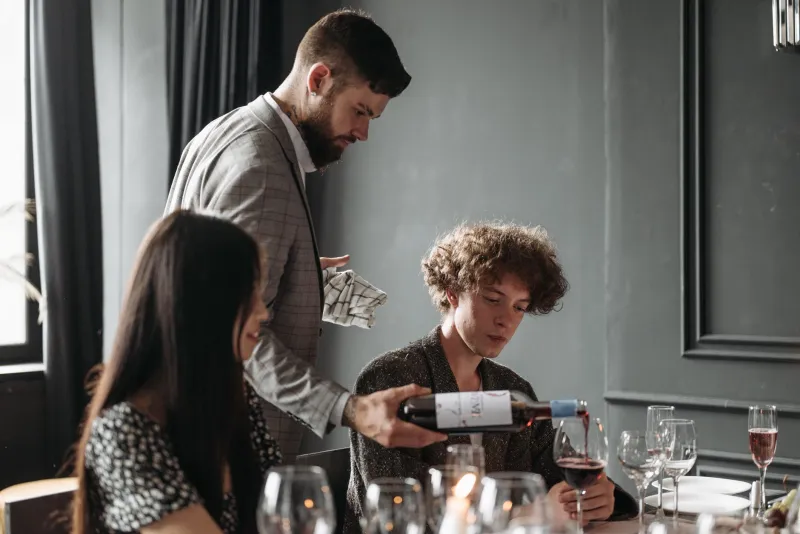
Perhaps the most philosophically interesting dimension of this generational shift concerns not what younger diners drink but how they wish to drink it. The formality that has long been synonymous with fine dining—the tableside decanting ritual, the extended presentation of the label, the deference implicit in the sommelier's posture—is not universally embraced by a generation that has learned to approach wine through conversation rather than ceremony.
This is not, it should be said, an indifference to quality. Younger wine enthusiasts in Charlotte are often remarkably knowledgeable and deeply engaged. What they are less interested in is the performance of hierarchy—the implicit suggestion that the sommelier's authority over the table's experience is absolute.
"They want a dialogue," observes one veteran Charlotte wine director who has adapted his service style considerably over the past several years. "They want to tell me what they've been into lately, hear what I think about it, maybe disagree with me. That's a fundamentally different dynamic than presenting a bottle and waiting for approval."
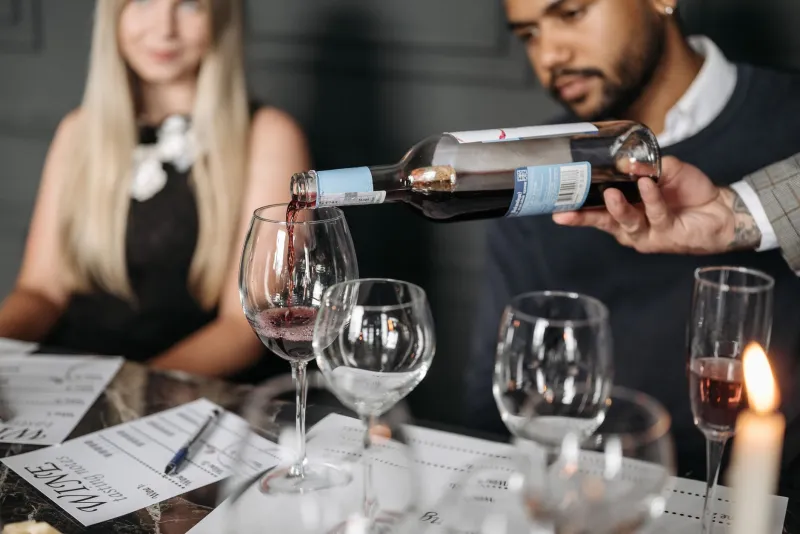
The restaurants navigating this most successfully are those that have found ways to maintain their commitment to quality and expertise while relaxing the performative aspects of service. The sommelier as knowledgeable peer, rather than arbiter of taste, is the model that appears to resonate most strongly with younger diners—and, notably, with a growing number of older ones as well.
What the Established Scene Is Learning
The most candid assessment from Charlotte's established wine community is that younger drinkers are not simply demanding accommodation. They are, in some respects, offering instruction.
Their willingness to seek out obscure producers, to engage with unfamiliar varieties, and to approach wine as a living conversation rather than a fixed canon has introduced a productive restlessness into a culture that can tend toward calcification. The questions they ask—why is this region underrepresented, what are you personally excited about, what would you never order here—are questions that any serious wine program should be able to answer.
Charlotte's fine dining scene, at its best, has always been defined by a commitment to genuine quality and genuine hospitality. The generation now arriving at its tables does not ask for less than that. It asks, in certain respects, for more—more honesty, more curiosity, and more willingness to meet a guest where they actually are. That is not a diminishment of the fine dining standard. It is, arguably, its most faithful expression.