Against Agreement: The Case for Wine Pairings That Push Back
The conventional wisdom of wine pairing is built on the architecture of agreement. Rich dishes call for full-bodied wines. Delicate preparations invite restrained pours. Acid mirrors acid; fat is softened by tannin; sweetness in the sauce finds its echo in the glass. The logic is coherent, the results are reliable, and for many diners, the experience is entirely satisfying.
It is also, on occasion, deeply forgettable.
Harmony, by its nature, resolves tension. And it is tension—friction, surprise, the slight cognitive dissonance of a pairing that does not immediately make sense—that tends to generate the most enduring dining memories. A meal where every combination lands smoothly is a pleasant meal. A meal where one pairing stops the conversation and demands examination is a meal that gets discussed for years.
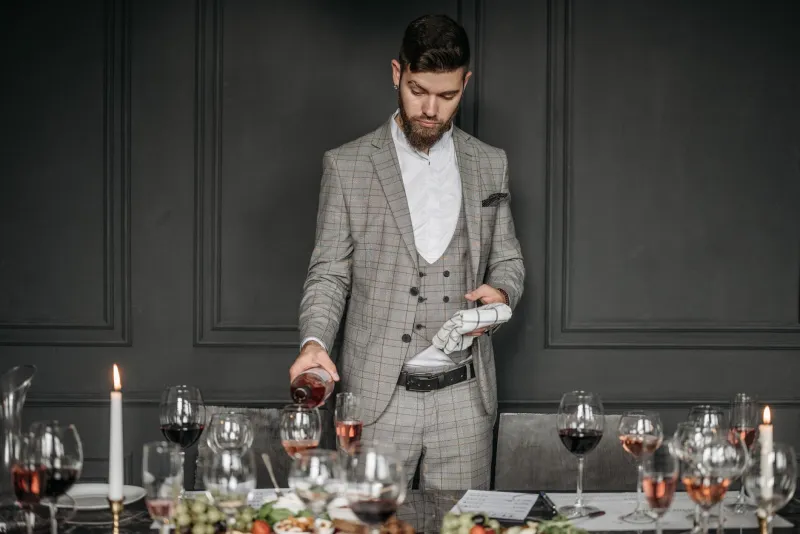
Charlotte's more adventurous sommeliers and culinary teams are beginning to build programs around exactly this principle, and the results are worth paying close attention to.
The Mechanics of Productive Tension
To be clear about terms: deliberate tension in pairing is not the same as careless mismatch. Pouring a heavily oaked, high-alcohol Chardonnay against a plate of raw oysters is not a bold choice—it is a mistake, and the diner suffers for it. What the contrast-based pairing philosophy proposes is something more precise: the intentional introduction of a wine element that creates friction with the food in a way that illuminates both.
The distinction matters. A wine that fights a dish produces confusion and discomfort. A wine that challenges a dish—that introduces a counterpoint the palate must work to reconcile—produces engagement. The goal is always the latter.
The most effective contrast pairings tend to operate along a small number of axes: texture against texture, intensity against delicacy, structural weight against lightness, or aromatic profile against flavor expectation. When executed with care, each of these can produce moments of genuine revelation.
High Tannin Against Seafood: Reexamining a Cardinal Rule
Few pairing prohibitions are stated with greater conviction than the injunction against red wine with fish. The conventional explanation—that tannin reacts with the iodine compounds in seafood to produce a metallic, unpleasant finish—is not without basis. But it is also not universal, and treating it as absolute forecloses some of the more interesting pairings available to the contemporary diner.
The key variable is the preparation. A simply grilled piece of fish, particularly one with delicate flesh and minimal fat, will indeed suffer beside a heavily tannic wine. But a braise, a butter-enriched sauce, a char that introduces bitter notes to the protein—these change the equation considerably.
Consider a lightly structured Pinot Noir from the Willamette Valley or Burgundy against a seared salmon with a brown butter preparation. The wine's modest tannin finds purchase in the caramelized exterior of the fish; its red fruit character plays against the richness of the butter rather than the delicacy of the protein. The pairing is not harmonious in the classical sense. It is interesting, and interesting is frequently more valuable at the table.
Some Charlotte kitchens working with more assertive seafood preparations—cured fish, smoked shellfish, or richly sauced crustacean dishes—have begun offering structured red options alongside the expected whites, allowing guests to explore the contrast on their own terms.
Spice and Structure: When the Wine Refuses to Yield
Another productive frontier for contrast pairing involves the relationship between spice-forward dishes and wines with genuine structural presence.
The conventional approach to spiced food is to reach for off-dry whites or low-alcohol, fruit-forward reds—wines that soften in the face of heat and provide relief rather than engagement. This works. It is also somewhat passive, treating the wine as a palate cleanser rather than a partner in the experience.
A different approach introduces a wine with its own assertive character—a Grüner Veltliner with pronounced white pepper notes, a Northern Rhône Syrah with its characteristic black olive and cured meat aromas, or a Tempranillo with significant oak structure—against a dish built on warm spice. The result is not comfort. It is conversation: two strong voices occupying the same space, each making the other more audible.
For diners who engage seriously with wine as a subject, this kind of pairing generates discussion in a way that a smooth, unchallenging match rarely does. It raises questions. It invites return visits to test the theory. It creates the kind of dining experience that extends beyond the table.
Aromatic Mismatch as a Tool for Discovery
Perhaps the most intellectually interesting category of contrast pairing involves aromatic dissonance—choosing a wine whose nose points in a direction entirely different from the dish's flavor profile, and allowing the palate to navigate the distance between them.
A mineral-driven, almost austere Chablis against a preparation that leads with umami richness. A floral, perfumed Viognier beside a dish built on savory depth. A wine that smells of one thing and a plate that tastes of another, and the moment of reconciliation between them.
These pairings require a diner who is paying attention, and they reward that attention generously. They are not appropriate for every table or every occasion. But for guests who come to a fine dining experience in Charlotte specifically to be challenged and educated, they represent some of the most memorable moments available.
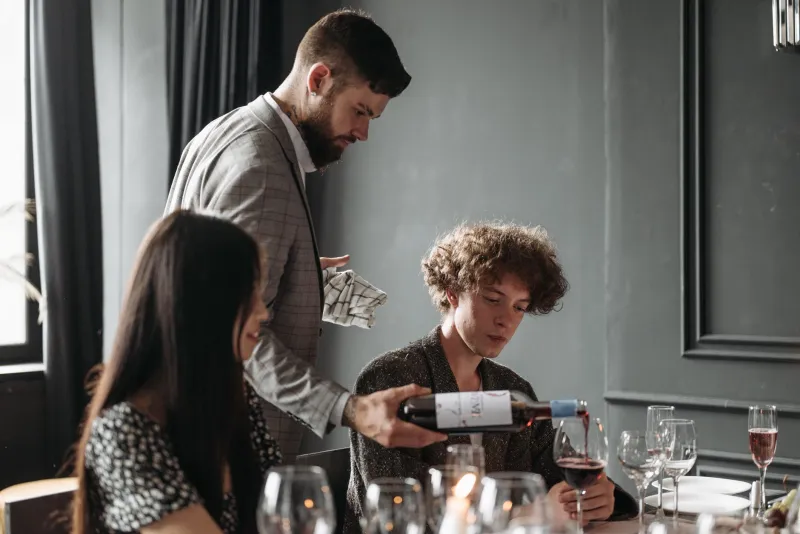
The sommelier's role in these situations is critical. The contrast pairing that lands as a revelation does so because it has been explained and contextualized. Without that framing, the same pairing may simply register as a mistake. The best practitioners of this approach in Charlotte's dining rooms understand that the conversation around the pairing is as important as the pairing itself.
An Invitation to Productive Discomfort
Harmony will always have its place at the fine dining table. There are evenings when the diner wants to be held by the meal rather than challenged by it, and a program built entirely on tension would exhaust rather than delight.
But the next time a sommelier offers a suggestion that seems counterintuitive—that raises an eyebrow before it raises the glass—consider accepting it. The meal that surprises you is the one you will carry forward.
Agreement is comfortable. Contrast is memorable. And at a table set with intention, the memorable moment is always worth pursuing.