Ask Before You Commit: The Fine Diner's Case for Requesting a Taste
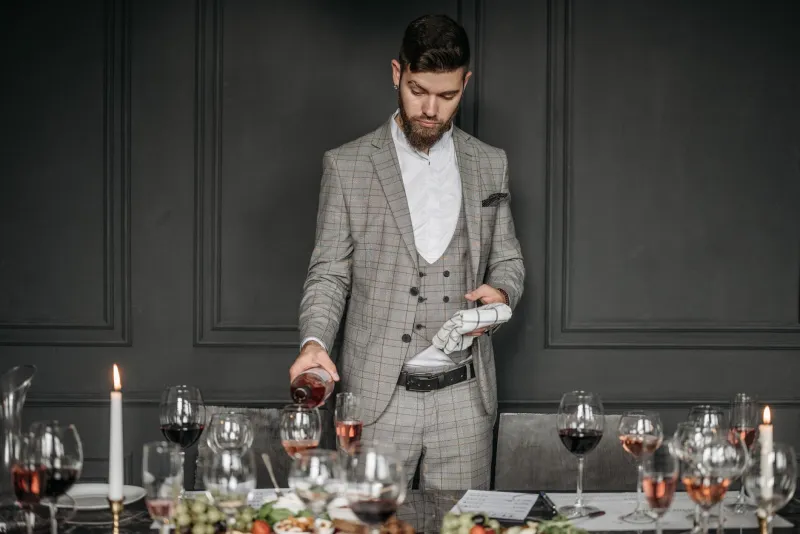
There is a moment familiar to anyone who has spent serious time at Charlotte's finer tables — the pause that follows the sommelier's recommendation. The wine list sits open, the description sounds promising, and yet something gives the diner reason to hesitate. The price is not inconsequential. The grape variety is intriguing but unfamiliar. The vintage is one you have not personally encountered. In that pause lives an opportunity that far too few diners choose to seize: simply asking to taste before ordering.
This is not an act of indecision. It is, in fact, the signature behavior of a guest who takes wine seriously.
The Psychology of the Pre-Purchase Sip
Buyer's remorse at the dinner table is a peculiarly uncomfortable experience. Unlike a regrettable retail purchase that can be returned, a bottle of wine opened tableside carries no such remedy. The commitment is immediate, the cost is absorbed, and the evening's enjoyment can be quietly diminished by a wine that simply did not align with your expectations or the food before you.
Wine educators and service professionals frequently observe that casual drinkers treat the wine list as a menu of certainties, while more experienced enthusiasts understand it as a field of possibilities requiring active navigation. The tasting request is one of the clearest expressions of that distinction. It signals to the sommelier that you are engaged, that your palate has preferences worth honoring, and that you approach the selection as a collaborative conversation rather than a passive transaction.
Charlotte's upscale dining scene has cultivated a guest base sophisticated enough to appreciate this dynamic. At restaurants where the wine program is treated as equal in importance to the culinary menu, the invitation to taste is often extended before the guest even thinks to ask. At others, it simply requires knowing that you may.
What Sommeliers Are Actually Doing When They Offer a Sample
From the other side of the table, the tasting pour is rarely a reluctant concession. For a skilled sommelier, it is a diagnostic tool — an opportunity to observe your reaction, refine their understanding of your palate, and steer the selection toward something that will genuinely satisfy. A guest who sips, considers, and responds thoughtfully gives the sommelier far more useful information than one who simply points to a number on the list.
Sommeliers at Charlotte's most respected establishments have noted that the guests who request samples tend to ask better follow-up questions, engage more meaningfully with the pairing process, and ultimately leave with a higher degree of satisfaction. The sample is not merely a courtesy; it is the beginning of a more productive dialogue.
There is also a practical dimension to this practice that experienced sommeliers navigate carefully. In a restaurant environment, an open bottle represents inventory in motion. A wine that is already open for by-the-glass service presents an obvious opportunity for a sample. A bottle that would need to be opened specifically for your consideration is a different matter — one that requires a degree of mutual commitment and trust. Understanding this distinction will help you ask at the right moment and in the right spirit.
The Etiquette of Asking Gracefully
The manner in which you request a taste matters considerably. A guest who demands a sample as though auditing a purchase inspires a very different response than one who frames the request as curiosity and collaboration. The language of fine dining is, at its core, the language of partnership.
A simple, direct approach serves well: express genuine interest in the recommendation, acknowledge that you are unfamiliar with the producer or vintage, and ask whether a small taste might be possible before committing. Most sommeliers at Charlotte's premier establishments will respond with warmth and, when logistically feasible, with a pour.
It is equally important to taste with intention. Swirl the glass, take a moment to assess the aroma, and sip with focus. Offer a genuine response — whether enthusiastic or uncertain — and allow the sommelier to guide the conversation from there. This is not a performance. It is an honest exchange, and honesty produces the best outcomes at the table.
Building Confidence Through Repetition
For diners who are actively developing their palates, the pre-purchase taste is also one of the most efficient forms of wine education available. Each sample encountered in a fine dining context arrives with context — the sommelier's commentary, the food it is intended to complement, the occasion it is meant to serve. That layering of information accelerates understanding in ways that solitary study simply cannot replicate.
Over time, diners who regularly request tastes at Charlotte's upscale restaurants develop a mental library of producers, regions, and styles that informs their ordering with increasing confidence. What begins as hesitation gradually becomes discernment. The pause before ordering shrinks — not because the choice has become less important, but because the diner has equipped themselves with genuine knowledge.
Table & Twine has long maintained that the finest dining experiences in Charlotte are not those where everything unfolds according to a predetermined script. They are the ones shaped by genuine curiosity, honest engagement, and the willingness to ask a question before assuming you already know the answer.
The next time a sommelier presents you with a recommendation that intrigues but does not yet convince, consider the simple power of three words: May I taste? The answer, more often than not, will be yes — and the experience that follows will be richer for it.